- All
- Product Name
- Product Keyword
- Product Model
- Product Summary
- Product Description
- Multi Field Search
Views: 0 Author: Site Editor Publish Time: 2025-12-30 Origin: Site

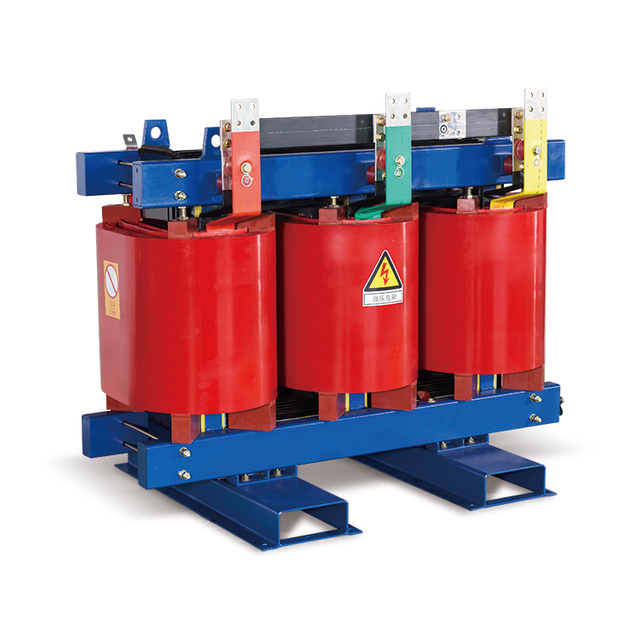
Dry type transformers function in current power networks by employing solid insulation materials, such as epoxy resin. This approach removes the need for flammable oil, which allows for safer placement indoors in city areas and factory locations. Their structure focuses on saving energy through materials that cause little loss and good heat control with air movement, so these units offer greater dependability and need less upkeep. They help keep the grid steady by managing voltage levels and cutting down on harmonics. Besides, their flexible and strong build makes them fit well in various tough settings.
Dry type transformers gain more preference in city and factory power setups because of their built-in safety features and benefits for the environment. In contrast to units filled with oil, dry type transformers avoid using flammable liquid for insulation. Therefore, they greatly lower the chances of fires. This feature renders them especially appropriate for closed areas, including office buildings, medical centers, computer server rooms, and public transport facilities.
Without any oil, there is no chance of spills, ensuring that operations remain clean and follow rules for the environment. Besides, these transformers demand little upkeep, so they work well in places where routine checks are hard to perform. Advanced heat control features, like axial air paths for cooling, improve the removal of heat. Consequently, the units can run in tight or well-vented spaces. Meanwhile, the coil includes axial air paths for cooling, which boosts the ability to dissipate heat.
Insulation materials play a key part in how well dry type transformers perform. Epoxy resin coating protects the windings against water, dirt, and chemical substances. These elements can harm operation and cause early breakdown. Furthermore, systems based on Nomex offer outstanding ability to withstand heat. Thus, transformers can operate dependably in hot conditions without failing.
The strength against electricity and ability to bear extra load depend much on chosen materials. Epoxy resin builds a stiff barrier for insulation. It not only strengthens the mechanical parts but also betters electrical protection.
Insulation grades like Class F and Class H permit higher allowed temperatures during work. Transformers can thus manage more heat stress without quick aging, which increases their ability to carry loads and prolongs their useful life.
Moreover, good insulation lowers dangers from partial discharges, leading to insulation problems in high-voltage usage. By cutting the chances of electrical failures, the insulation layout directly aids overall dependability.
Proper control of heat guarantees safe and steady running of transformers. Dry type models depend on natural or forced air methods to keep core and coil temperatures in check. The transformer comes with a cross-flow top-mounted cooling fan. This fan produces low noise, strong air pressure, and an attractive look. It also raises the transformer's capacity for overloads.
Air ducts receive careful design to direct flow over parts that produce heat, such as windings and core layers. In addition, sensors for temperature built into the units allow monitoring in real time. An intelligent temperature controller equips the transformer. This improves safety and dependability during operation.
Resin coating naturally lessens stresses from heat expansion due to load changes. Improved coil shapes ensure even spread of magnetic flow. This reduces local hot areas. The coil includes axial air paths for cooling, which improves heat removal.
Enclosures with suitable IP levels stop dust from building up on surfaces meant for cooling. This factor, though sometimes ignored, can greatly harm heat removal if present. The casing offers extra safety for the transformer. Protection grades include IP20, IP23, IP30, IP33, and others.
Dry type transformers add directly to grid dependability. They keep voltage output steady despite changing load situations. Tap changers permit adjustments in voltage within ±5% or ±2×2.5% limits without stopping service. This proves vital for power companies handling high demand periods or adding sources from scattered generation.
Such steadiness matches well with delicate factory machines that need constant voltage to prevent errors or poor efficiency. The capacity to supply power without breaks also aids important facilities in areas like health care and production.
Current electric grids frequently include nonlinear loads, like speed-varying drives and electronic power devices. These bring in harmonics. Dry type transformers lessen such impacts via thoughtful magnetic path designs.
The core column receives binding with F-class weft-free bands. Its surface gets wrapping in epoxy resin. This cuts no-load loss, no-load current, and core noise. The improvement lowers harmonic twisting at the origin. It stops excess heat in cables and devices further along. By bettering power factor and reducing losses tied to harmonics, transformers boost total grid performance. They also assist users in dodging fees from power suppliers.
Choosing a dry type transformer starts by aligning rated power with expected load patterns. This ensures best use and prevents too small or too large sizing. For example, SHENGTE’s SCB10 series provides ratings from 30 kVA to 2500 kVA.
Limits on installation space also affect choices. Units like the SCB10-630kVA have small sizes ideal for building lower levels or updates.
Conditions in the surroundings require certain enclosure kinds based on dangers like dust or chemical fumes. Casing materials cover aluminum alloy, cold rolled steel plate, stainless steel, and more. These options allow placement in varied locations, from spotless rooms to harsh factory zones.
Customization proves necessary for smooth fitting into special setups, such as plants for renewable power or automatic assembly lines. Adjusted voltage proportions fit local grid setups or particular machine needs.
One clear case is the SCB10 630kVA 6kV/400V Customized Three-Phase Resin Casting Dry-Type Power Transformer. It provides exactly matched output for city distribution systems. This shows how engineering focused on specific uses aids best performance.


Cast resin coating creates a strong barrier against electricity. It protects from outside entry, including water and particles in air. This makes the transformers fit for outside or factory uses.
Their design without oil removes spill dangers common in liquid-filled models. It also permits location in zones where fire rules limit flammable items. The oil-free approach avoids leakage issues seen in liquid-filled transformers.
Additionally, their build resists shakes and supports use in moving substations or areas prone to earthquakes. Structural strength stays intact.
Safety receives further support from insulation systems that do not burn. They stop fire spread in fault situations. Operation without much maintenance lowers costs over time compared to oil-cooled types. Those need regular checks on fluid and holding areas.
The SCB10 2500 KVA 10 / 0.4 Kv 3 Phase High Voltage Cast Resin Dry Type Power Transformer shows strength in heavy-load factory settings. Cast resin technology thus becomes a top pick for vital tasks needing strong dependability.

SHENGTE focuses on creating advanced dry type transformers suited to today's power needs in business, utility, transport, and renewable energy fields. Emphasis lies on safety, saving energy, and tailoring. SHENGTE supplies answers that match global standards, such as IEC60076 and ISO approvals.
SHENGTE acts beyond a mere provider. It works closely with customers to offer solutions fit for particular uses. These outperform standard options, whether for small units in cities or large ones in factory areas.
Q: What makes dry type transformers more suitable than oil-filled ones for indoor applications?
A: They use solid insulation instead of flammable oil, which eliminates leakage risks and reduces fire hazards—making them safer for enclosed environments like hospitals or commercial buildings.
Q: Can dry type transformers handle high humidity or corrosive atmospheres?
A: Yes, especially when using cast resin encapsulation combined with corrosion-resistant enclosures; these designs are ideal for coastal areas or chemical plants.
Q: How often does a dry type transformer need maintenance compared to an oil-filled unit?
A: Dry type transformers generally require less frequent maintenance due to their sealed windings; regular inspections are sufficient unless signs of overheating or contamination appear.