- All
- Product Name
- Product Keyword
- Product Model
- Product Summary
- Product Description
- Multi Field Search
Views: 0 Author: Site Editor Publish Time: 2026-09-24 Origin: Site
Installation, Fire Safety and Dry Type Transformer Applications
Performance and Lifecycle Cost of Oil Immersed vs Dry Type Transformers
Choosing between a dry type transformer and an oil-immersed transformer is not about picking the safer-looking technology. Both can serve distribution loads, but they manage insulation, heat and installation risk differently. Start with the site's fire rules and space, then check load, voltage, cooling and lifetime cost. A nameplate cannot tell you which arrangement will be easier to install or operate. This guide compares the designs on practical terms and shows how to evaluate a verified cast-resin model without treating one product as a universal answer.
Both designs transfer energy through changing magnetic flux in a core. In an oil-immersed unit, liquid insulates energized parts and carries heat to the tank's cooling surfaces. A cast-resin unit has solid winding insulation and rejects heat to air, naturally or with fans where specified. Removing oil changes containment and cooling requirements; it does not remove the need to manage temperature, electrical clearances or protection.
The core provides the magnetic path; primary and secondary coils establish the voltage ratio. In this core and coil assembly for a dry-type transformer, insulation, supports and cooling passages must work together under loading and fault forces. Ask about conductor material, insulation and inspection access rather than assume every cast-resin design shares the same components. Oil units also have cores and coils, but their insulation and heat paths depend on the liquid and tank.
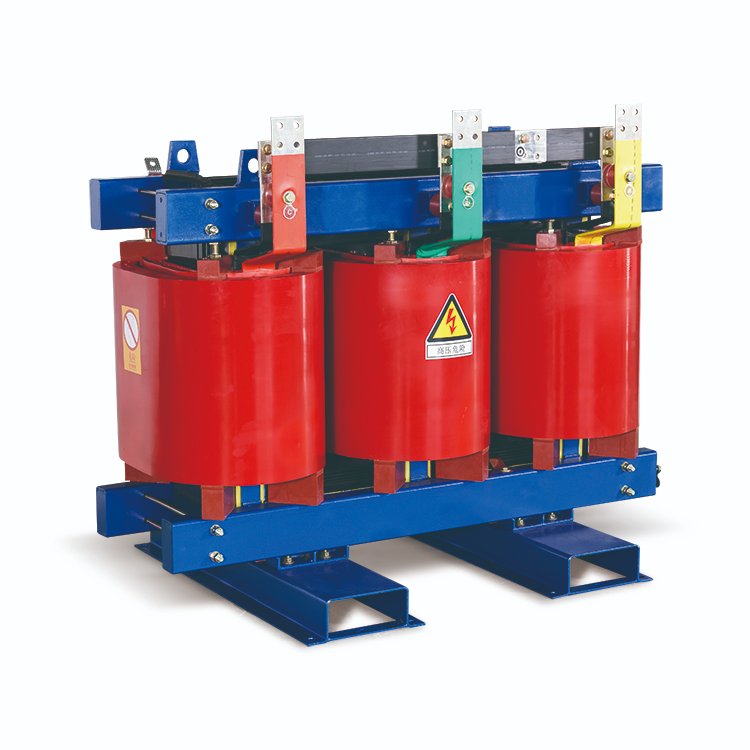
A dry-type transformer winding assembly needs sound insulation, suitable conductors and effective heat removal. The dry-type transformer active-parts assembly combines the magnetic core, energized windings and supports. In the promoted 1250 kVA cast-resin design, the high-voltage winding is vacuum cast in epoxy; the low-voltage winding uses foil and an axial air duct. These are specific construction facts, not a specification for every dry unit.
An oil-filled design needs leakage controls, fire separation and any containment required locally. A dry unit removes the oil-leakage pathway, potentially simplifying indoor layouts, but electrical faults and overheating still need controls. Neither construction meets every building's fire rules automatically. Check the insulating medium, enclosure, detection, suppression and installation standards before calling one option safer for a particular room.
Air-cooled units need clear intake and exhaust; a crowded room can impair cooling despite an adequate kVA rating. Oil equipment likewise needs specified heat dissipation and service access. Outdoors, inspect rain, temperature, dust, corrosion, drainage and enclosure rating. An open-frame cast-resin design is not automatically outdoor-ready because it is oil-free. Confirm protective housing and permitted ambient conditions first.
Typical indoor applications include commercial and industrial distribution rooms where avoiding insulating liquid helps the site. Selection still turns on ventilation, noise, cleaning access and fire strategy. An oil alternative can work where the site accommodates a suitable tank and controls. Heavy motor starts, harmonics or changing demand require an engineering check for either technology, whatever the location label.
Start with maximum demand, continuous duty, motor starting and future growth, not connected load alone. Heat rises with loading, and installation affects its removal. A fan-assisted dry design may have different permitted loading from natural-air operation; verify any overload claim for that model and ambient setting. Oil systems have their own cooling and temperature limits. Compare units against actual duty, not an idealized peak.
No-load loss accumulates while energized; load loss varies with current and its reference conditions. Compare the same kVA, voltage, connection, temperature and test basis, then apply expected hours and load profile. One published figure cannot establish that an entire technology has lower losses. Request separate no-load and load figures, and calculate energy cost for the project's operating pattern.
In an oil immersed transformer vs dry type transformer comparison, purchase price is only one cost. Include ventilation, enclosure, containment where required, access, outages and energy losses. Liquid-filled units may require oil-condition and leakage checks; dry windings and air passages still need inspection and cleaning. Building works and maintenance restrictions can reverse an apparent price advantage. Seek project-specific quotations before choosing a lifetime-cost winner.
The SHENGTE SCB10-1250/10 is a three-phase, two-winding dry type transformer rated at 1250 kVA. Its named 10/0.4 kV pairing comes with listed 6, 10 and 11 kV high-voltage options; confirm the ordered configuration. This SCB10-1250/10 1250 kVA dry-type transformer has cast-resin high-voltage and foil low-voltage windings, with natural or forced air cooling options. Listed figures include 6% impedance, 2.09 kW no-load loss and 9.69 kW load loss at 120°C. They do not describe every SCB10/11 variant.
A 1000 kVA dry-type transformer is a separate capacity choice, not another rating for the promoted 1250 kVA unit. SHENGTE lists SCB10-1000 separately from SCB10-1250. Choose using demand, operating margin and site conditions, then confirm voltage, impedance and cooling. Oversizing without a load study can increase idle-loss expenditure; undersizing can create thermal problems or limit expansion. Match the 1250 kVA nameplate to a defensible load schedule.
Before specifying the SHENGTE model, send primary and secondary voltages, maximum and continuous load, connection, fault level and site conditions. Confirm the cooling mode and suitable enclosure. When evaluating quotations, check the agreed loss and temperature basis. Our configuration review depends on project data; catalogue figures cannot replace a coordinated transformer and protection study.
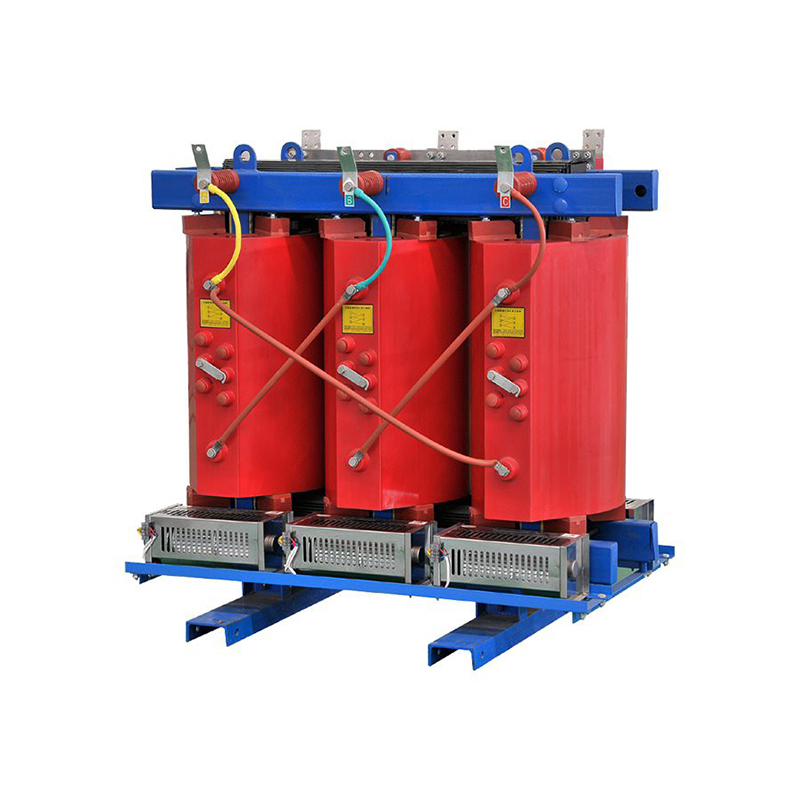
Where liquid containment or fire separation is difficult indoors, a suitably enclosed and ventilated dry design may be a practical starting point. Where an oil installation is feasible, compare cooling, civil works and maintenance before excluding it. Assess proposed units against actual fire rules, exposure and access. The choice concerns an installation, not a technology label.
Compare matched capacity and voltage offers using running hours, varying demand, starts, losses and installation cost. A dry type transformer is not automatically the cheapest over its life merely because it does not require oil testing, and a liquid-cooled model does not automatically have lower losses. Future growth and ambient temperature can matter more than a small purchase-price difference.
An RFQ needs the load schedule, kVA, voltage ratio, connection group, fault and protection data, ambient conditions, enclosure and cooling preferences. Note indoor fire controls or outdoor exposure. Give suppliers identical assumptions to make their bids comparable; only then can the construction and model be justified.
Choose a dry design when oil-free construction genuinely helps and ventilation and electrical duty are supported. Choose an oil-immersed design when installation provisions and whole-life costs fit better. The 1250 kVA example makes checks concrete, but the decision depends on verified loads, environmental limits and comparable bids.