- All
- Product Name
- Product Keyword
- Product Model
- Product Summary
- Product Description
- Multi Field Search

Views: 0 Author: Site Editor Publish Time: 2026-08-06 Origin: Site
1.What Is Transformer Oil Density?
2.Typical Transformer Oil Density Values and Temperature Effects
3.How to Test Transformer Oil Quality and Density
4.Recommended Product – SHENGTE Oil Immersed Transformer
Transformer oil serves as a vital material inside an oil-immersed transformer. It provides essential insulation and cooling. Furthermore, it aids in arc suppression and ensures long-term equipment stability. For engineers, buyers, and maintenance teams, understanding the density of transformer oil helps them evaluate oil condition. This knowledge also makes it easier to assess thermal performance and overall transformer reliability.
The density of transformer oil goes beyond a simple laboratory number. It shows the clear relationship between oil mass and volume. Moreover, this value changes with temperature, contamination, aging, and specific oil formulation. In a three-phase oil-immersed distribution transformer, good oil quality protects the core and windings. At the same time, it supports steady heat dissipation. This explains why the density of transformer oil is often checked alongside dielectric strength, moisture, acidity, and other key oil quality indicators.
At SHENGTE, we build oil-immersed transformer solutions designed for dependable power distribution. Our S11-M-30/10 three-phase oil-immersed transformer uses transformer oil for both insulation and cooling. Consequently, this helps customers achieve steady operation across industrial, commercial, and utility applications.

The density of transformer oil refers to the mass of the oil per unit volume. People usually express this as g/ml or kg/m³. In simple terms, it shows how heavy a specific volume of oil is. Because transformer oil expands when heated and shrinks when cooled, you must always look at density alongside the test temperature.
Density stands out as one of the essential properties of transformer oil because it impacts oil circulation, cooling behavior, and overall oil compatibility. In an oil-immersed transformer, the fluid must flow smoothly around the core and windings. This movement transfers heat away from active parts. If the oil characteristics change a lot, both cooling performance and insulation reliability might suffer.
Transformer oil also does a great job providing electrical insulation. It fills the empty spaces between energized parts and grounded structures. Thus, it helps prevent internal discharge and electrical breakdown. Following typical transformer oil maintenance guidance, transformer oil delivers the necessary electrical insulation. It also helps remove heat generated during normal transformer operation. When the oil degrades or gets dirty, transformer performance and reliability can drop significantly.
For this reason, you should not look at oil density by itself. Instead, consider it along with viscosity, dielectric strength, moisture content, and acidity. You should also check the flash point and the transformer oil boiling point. Together, these indicators help maintenance teams see if the oil stays fit for safe and steady operation.
For standard mineral insulating oil, workers usually measure density at 20°C. The accepted IEC 60296 reference limit sits at 0.895 g/ml at 20°C for typical transformer oil. This provides a helpful benchmark when you evaluate oil quality and check acceptance requirements.
Temperature has a huge, direct impact on the density of transformer oil. When the temperature goes up, the oil expands. As a result, its density drops. When the temperature goes down, the oil shrinks, so its density goes up. Because of this, testing labs always apply a temperature correction. They do this before comparing measured values with official standards or manufacturer specifications.
A basic example makes this relationship easy to grasp. Imagine two samples that contain the exact same oil. However, they are tested at different temperatures. The warmer sample might show a lower density. Yet, the actual oil chemistry has not changed at all. Without proper temperature correction, someone could easily misread the result as a real quality difference.
During actual daily operation, density also influences heat transfer. The oil needs to move freely through the cooling channels and around the transformer parts. If the oil gets contaminated or oxidized, its physical and chemical traits might change. Consequently, this can lower cooling efficiency and raise long-term operational risks.
Key points regarding temperature include:
· Density is typically reported at a standard reference temperature, usually 20°C.
· A higher oil temperature generally leads to a lower measured density.
· A lower oil temperature generally leads to a higher measured density.
· Test results must be corrected before you compare them with standard limits.
· You should interpret density alongside other oil test results, rather than looking at it alone.
For buyers looking into oil-immersed transformer China options or checking out the oil-immersed power transformer market, understanding oil density is quite useful. It helps them ask much better technical questions during the supplier evaluation process.
Good transformer oil testing starts with proper sampling. You should take the oil sample from the correct sampling valve or designated point. Always use a clean and completely dry container. Bad sampling can introduce moisture, dust, or air bubbles. These issues will cause wrong results. Before sending it for laboratory testing, label the sample clearly. Include the transformer model, sampling spot, date, operating state, and the oil temperature if you have it.
You can perform density testing using a hydrometer or a modern digital density meter. A hydrometer is an older, traditional tool. It floats in the oil and provides a density reading based on natural buoyancy. On the other hand, a digital density meter gives much faster and more accurate results. This is especially true when you need exact temperature correction.
However, your transformer oil testing should definitely include more than just density. A thorough oil quality program usually checks several key indicators:
· Dielectric strength, to check the overall insulation performance
· Moisture content, to spot any unwanted water contamination
· Acidity, to measure signs of oil aging and oxidation
· Interfacial tension is used to find early contamination and deterioration
· Dissolved gas analysis, to spot possible hidden internal faults
Doing regular transformer oil testing supports early fault discovery and smart preventive maintenance. Testing can find moisture, oxidation, overheating, discharge activity, or dirt. It finds these things before they cause a major transformer failure. This is very important for a low-loss oil-immersed transformer system. These systems are built to run efficiently over very long service periods.
For a 3-phase oil-immersed distribution transformer, the testing frequency relies on a few things. It depends on the load level, the operating environment, and the transformer's importance. It also depends on the oil type and your chosen maintenance plan. Critical industrial transformers usually need much closer monitoring than smaller, less critical units.
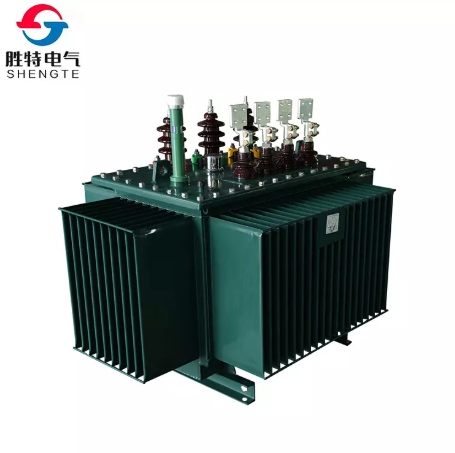
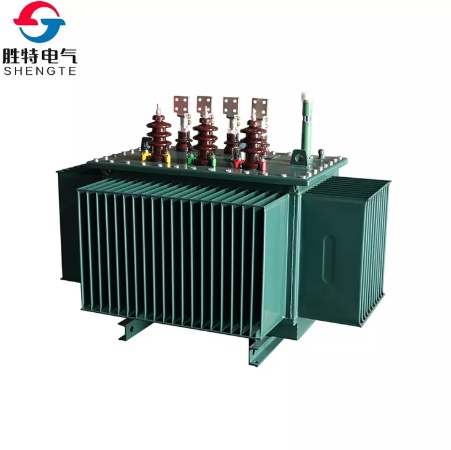
At SHENGTE, our S11-M-30/10 three-phase oil-immersed distribution transformer relies on high-quality transformer oil as the primary insulation and cooling medium. The fully sealed structure effectively separates the internal oil from the outside air. This greatly reduces oxidation and stops moisture from getting in. In turn, this supports safer operation and helps keep the properties of transformer oil stable over a long time.
As a dedicated China oil-immersed transformer supplier, we focus heavily on real-world, practical reliability. We do not just look at basic catalogue specifications. Customers searching for a reliable china oil-immersed type transformer factory usually care about high efficiency and good heat dissipation. They also value strong sealing quality, lasting oil stability, and easy maintenance. Our S11-M-30/10 model is carefully designed to meet all these needs for industrial, commercial, and utility projects.
The density of transformer oil acts as a major indicator in overall transformer oil testing. However, you should always evaluate it using proper temperature correction and alongside other oil quality results. Good oil density supports steady oil circulation, strong insulation performance, and effective heat dissipation. When you combine it with tests for dielectric strength, moisture, acidity, interfacial tension, and dissolved gases, density measurement is very powerful. It helps maintenance teams clearly understand if the oil remains fit for completely safe operation.
For oil-immersed transformers, transformer oil is much more than just a basic filling material. It forms a central part of the entire insulation and cooling system. Its current condition directly impacts overall reliability, total service life, and power distribution stability.
At SHENGTE, we build excellent oil-immersed transformer solutions designed for dependable long-term performance. Our S11-M-30/10 three-phase oil-immersed distribution transformer brings together highly efficient cooling and fully sealed construction. It offers stable oil management and very dependable power distribution performance. It is perfect for customers who want a top-quality, low-loss oil-immersed transformer from a proven oil-immersed transformer manufacturer in China.