- All
- Product Name
- Product Keyword
- Product Model
- Product Summary
- Product Description
- Multi Field Search
Views: 0 Author: Site Editor Publish Time: 2026-03-09 Origin: Site
The reliability of an oil type power transformer starts with its core design. The core handles magnetic flux transfer. Its efficiency shapes the overall performance of the unit. Modern transformers often use high-grade silicon steel as a key material. The iron core follows a stacked structure. It consists of silicon steel sheets that are thinner than 0.35mm. These sheets offer high magnetic conductivity. As a result, they cut down no-load loss and no-load current in the transformer. This approach lowers eddy current losses. It leads to better energy efficiency. It also reduces heat production.
Core lamination thickness matters a lot for transformer reliability. Thinner laminations decrease eddy currents and magnetic losses. This boosts operational efficiency. It also improves temperature stability. By cutting heat buildup, transformers keep their insulation strong for longer times. Thus, they last much longer in service.
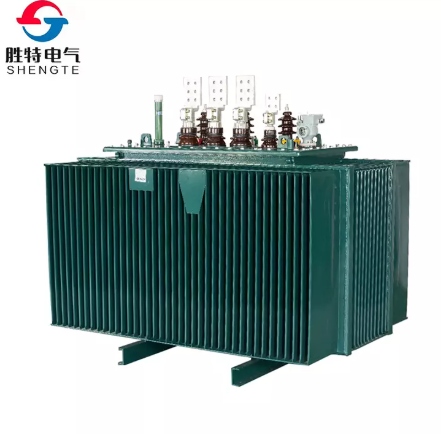
Another vital design element includes strong clamping mechanisms. These ensure structural stability under mechanical stress. The support structure provides high reliability. It offers good resistance to short circuits. It keeps no-load loss and no-load current low. These qualities stop deformation or misalignment during short-circuit events or transport. Therefore, they preserve steady magnetic performance over the transformer’s entire lifespan.
Insulation systems play a central role in electrical safety and durability for oil type transformers. Oil immersed transformer use oil as the main insulation medium. They also rely on oil as the cooling medium. The mix of solid insulation, like paper or pressboard, with insulating oil delivers dielectric strength. It also handles thermal management.
Manufacturers pick different materials based on their resistance to heat and electrical stress. The insulation materials show high heat resistance. They can handle overvoltage and overcurrent during operation. Over time, high temperatures may cause insulation aging. This leads to lower dielectric strength and possible breakdowns.
To fight this, makers use advanced drying methods. They vacuum dry the coil and core. Then, they filter the transformer oil and inject it through a vacuum process. This removes moisture from internal parts before sealing. As such, it boosts insulation strength against electrical stress. Moreover, keeping oil quality right is key. It stops oxidation and sludge buildup that might harm insulation performance.
Cooling systems affect a transformer's reliability by managing temperature rise during operation. Oil immersed transformer use oil as the main insulation medium. They also rely on oil as the cooling medium. The insulating oil separates conductive parts. At the same time, it serves as a thermal conduit. This transfers heat from windings to outer surfaces for release.

The thermal properties of transformer oil are essential for safe operating conditions. The transformer oil has low viscosity. It provides good heat transfer performance and insulation performance. These traits protect the iron core and winding effectively. They slow the aging of insulation materials. In turn, they lengthen the service life of the transformer. Better designs, like longitudinal oil ducts in coils, aid smooth circulation. The spiral coil with longitudinal oil duct offers good heat dissipation. It has low magnetic leakage and high mechanical strength. Plus, the reliable supporting structure greatly improves short circuit withstand ability.
In addition, corrugated tanks expand or contract with temperature changes. They do so without harming structural integrity or causing leaks. These design improvements prevent overheating. Overheating often leads to early failure. They also ensure stable operation under heavy load conditions.
Transformer tanks act as protective enclosures against environmental stressors like moisture, dust, or mechanical impact. The corrugated oil tank comes from high-quality cold-rolled steel plates. It is made on a dedicated production line. Its surface gets treatment with deoiling, rust removal, and phosphating. Before that, it receives a three proof (rain proof, moisture proof, and salt spray proof) paint coating. This boosts operational reliability and durability. It also lowers maintenance costs. Such sturdy construction provides long-term protection, even in tough climates.
Strong sealing techniques are just as important for system integrity. The sealing rings use high-quality rubber materials. These slow the aging process well. They block external air and prevent transformer oil leakage. By stopping air entry or moisture contamination, these seals maintain insulating properties. They also preserve cooling effectiveness.
Protective coatings add to corrosion resistance. They reduce maintenance needs over time. Together with sealed structures that keep internal components away from ambient air exposure—it adopts a sealed structure to completely isolate the transformer oil from the surrounding air—these methods together lengthen operational life spans.
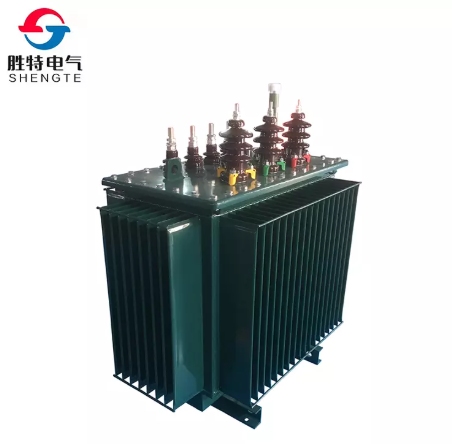
At SHENGTE, we emphasize designing high-performance solutions. These set new reliability standards in power networks. Our oil type power transformer range blends advanced engineering principles. We draw from years of technical expertise. By using advanced technology and refined oil immersed transformer processes, we combine our company’s extensive technical expertise. This ensures top product reliability.
Our products include laminated iron cores built for minimal losses—This results in significant reductions in both no-load loss and no-load current—and optimized winding configurations. These balance ampere-turn for steady output performance. Each unit goes through strict vacuum drying and precise assembly steps. This guarantees consistent quality control.
Performance metrics show our dedication to excellence, such as S11-M-630 power transformer exhibit low no-load currents (as little as 0.6%) while maintaining short-circuit impedance stability at 4%. Customer feedback often notes durability under varying loads. It also mentions low maintenance needs thanks to superior sealing designs.
We keep innovating through better material choices—using premium-grade silicon steel cores—and improved cooling structures. These promote efficient thermal regulation across all capacity ranges.
A: Common causes include insulation breakdown due to overheating or moisture ingress, excessive mechanical stress during short circuits, poor maintenance practices leading to contamination of insulating oil, and inadequate cooling resulting in thermal degradation.
A: The replacement frequency depends on operational load conditions but should follow regular testing intervals for dielectric strength and moisture content. If degradation indicators appear—such as reduced breakdown voltage—the oil should be filtered or replaced promptly to maintain optimal performance levels.
A: Yes. Operators should ensure proper grounding before energizing equipment, avoid exposure to open flames near transformers due to flammable oils, regularly inspect seals for leaks, monitor temperature gauges during peak loads, and always disconnect power before performing any maintenance work on live units.