- All
- Product Name
- Product Keyword
- Product Model
- Product Summary
- Product Description
- Multi Field Search
Views: 0 Author: Site Editor Publish Time: 2026-01-20 Origin: Site
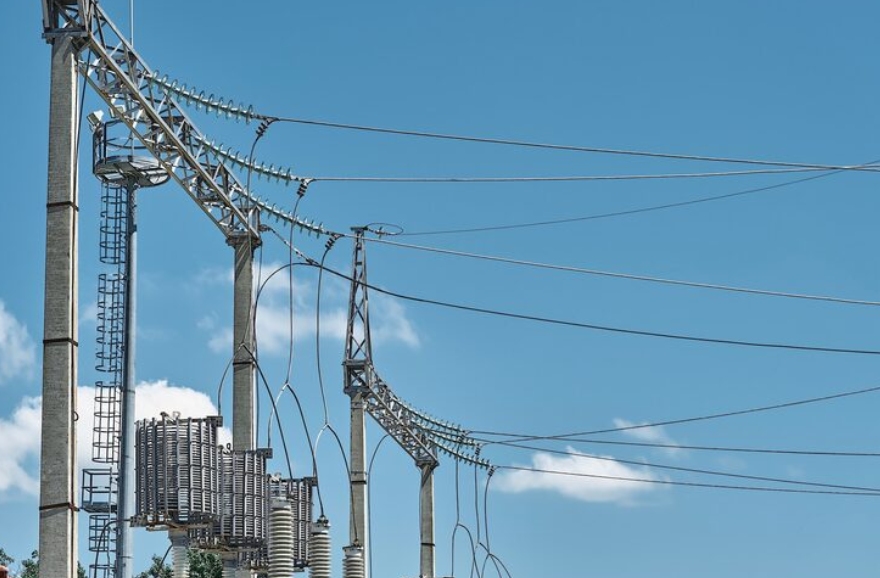

When you evaluate power system stability, it is tempting to focus on protection algorithms, relay coordination, or transformer parameters. In practice, many system disturbances escalate not because protection fails, but because the physical and functional structure of the electrical substation amplifies stress instead of absorbing it.
Substation structure governs how electrical energy flows, how faults propagate, and how quickly abnormal conditions can be isolated. Decisions related to layout, zoning, enclosure, and integration determine whether a disturbance remains local or evolves into a system-level instability. For you, structural design is therefore not an architectural concern—it is a core stability strategy that affects voltage behavior, fault containment, and operational predictability over decades of service.
Before stability can be managed through control or protection, it must be supported by the physical framework of the substation itself.
Primary layout defines the physical relationship between transformers, switchgear, busbars, and outgoing feeders. These relationships directly influence fault current paths, electromagnetic coupling, and heat accumulation. When layout decisions compress incompatible functions into a shared space, fault energy has fewer barriers, increasing the probability of cascading effects.
Conversely, layouts that respect electrical hierarchy—clear separation of incoming, transformation, and distribution zones—create natural buffers. These buffers allow you to preserve voltage stability during disturbances by limiting how quickly energy imbalances propagate across the system. Structural clarity at this level also simplifies future expansion, reducing the risk of introducing instability during retrofits.
Busbar design is often discussed in terms of capacity, but its influence on stability extends far beyond ampere ratings.
Segmented busbar arrangements reduce the electrical footprint of a fault. By limiting the number of feeders connected to a single faulted section, you shorten fault duration and improve post-fault voltage recovery. Proper spacing and insulation coordination further suppress arc development, which reduces transient voltage dips.
From a system perspective, these structural choices determine whether voltage rebounds smoothly or oscillates due to delayed isolation. When busbars are integrated into a structure that supports selective isolation, protection schemes operate with higher precision and fewer unintended interactions.
Electrical stability is closely linked to how clearly functions are separated within the substation.
Functional zoning prevents thermal and electrical stress from accumulating in sensitive areas. When protection and control equipment are isolated from high-energy zones, you reduce exposure to heat, vibration, and electromagnetic interference. This improves signal integrity and response speed during abnormal conditions.
Clear zoning also lowers operational risk. During emergency switching or maintenance, personnel can act decisively without disturbing adjacent systems. From a stability standpoint, this structural discipline reduces human-induced disturbances, which remain a major cause of grid instability worldwide.
As substations evolve,the integration strategy becomes a defining factor in stability performance.
Modular integration organizes equipment into repeatable, self-contained units with defined interfaces. This approach reduces wiring density, standardizes protection boundaries, and shortens fault location time. When a fault occurs, isolation is faster because the affected module is electrically and physically distinct.
In this context, SHENGTE is frequently selected for projects that prioritize structural coherence over ad-hoc equipment aggregation. Our approach emphasizes factory-validated integration, where transformer, switchgear, and enclosure design are coordinated as a unified system rather than assembled on site. This strategy aligns with your need for predictable stability over long service periods.
Urban and industrial environments impose strict spatial and deployment constraints that directly affect stability.
Prefabricated substations minimize variability introduced during construction. Factory assembly ensures consistent clearances, optimized airflow, and verified protection coordination. These factors improve thermal balance and reduce commissioning errors, both of which contribute to voltage stability under load fluctuations.
In compact distribution networks, the YBP 630kVA 10kV 400V OEM ODM Box-Type Pre-Fabricated Modular Transformer Substation demonstrates how a modular structure supports stable operation while simplifying installation and future upgrades.

In locations where safety, land use, or environmental exposure are dominant constraints, underground-oriented structures provide distinct stability advantages.
Buried or semi-buried substations benefit from reduced exposure to weather, mechanical impact, and unauthorized access. These conditions stabilize thermal behavior and lower the risk of sudden load disturbances caused by environmental factors.
By maintaining consistent temperature profiles, underground designs improve transformer efficiency and voltage regulation accuracy. The YBD 800kVA 12kV 0.4kV Customized Buried Type Power Transformer Package Substation reflects this structural philosophy, offering predictable performance in environments where surface installations would introduce unnecessary variability.

When stability is your primary objective, evaluation must extend beyond equipment specifications.
You should assess structural indicators such as fault containment boundaries, thermal zoning, maintenance accessibility, and expansion flexibility. A stable substation structure supports selective isolation, consistent airflow, and safe operational workflows.
By prioritizing these factors early, you reduce reliance on corrective control actions later. Structural discipline allows the power system to remain stable by design, rather than by constant intervention.
Q1: Can the substation structure compensate for weaker grid conditions?
A: A well-designed structure cannot replace grid capacity, but it can prevent local disturbances from escalating, preserving system stability under constrained conditions.
Q2: Does modular design reduce flexibility in future expansions?
A: When properly planned, modular structures improve expandability by standardizing interfaces and limiting disruption during upgrades.
Q3: Is structural optimization more critical for distribution or transmission substations?
A: It is critical for both, but distribution substations benefit most due to higher exposure to load variability, space limits, and environmental factors.