- All
- Product Name
- Product Keyword
- Product Model
- Product Summary
- Product Description
- Multi Field Search
Views: 0 Author: Site Editor Publish Time: 2026-01-28 Origin: Site


Efficiency in today’s grids is no longer a single metric printed on a nameplate. You operate inside networks shaped by fluctuating demand, distributed generation, power electronics, and tighter power-quality requirements. Under these conditions, standardized transformers often operate far from their optimal point, which is manifested in the facts that losses accumulate during light-load periods, voltage margins drift under peak stress, and thermal reserves are consumed unevenly across the lifecycle.
Customized power transformers shift efficiency from a static equipment attribute to a dynamic system function. When design parameters follow your real load profile, environmental constraints, and network topology, the improvement of efficiency is reflected not only in watts saved but also in stability, asset lifespan, and operational predictability. The following sections explain where that efficiency is actually created.
SHENGTE operates as a manufacturer focused on green power distribution, energy efficiency, and environmental performance, with a product portfolio covering oil-immersed transformers, epoxy resin cast dry-type transformers (SCB series), combined transformers, prefabricated substations, and high–low voltage switchgear systems. We have over 15 years of manufacturing experience, run a production base exceeding 12,000 square meters, and follow ISO9001 quality management with products aligned to IEC standards.
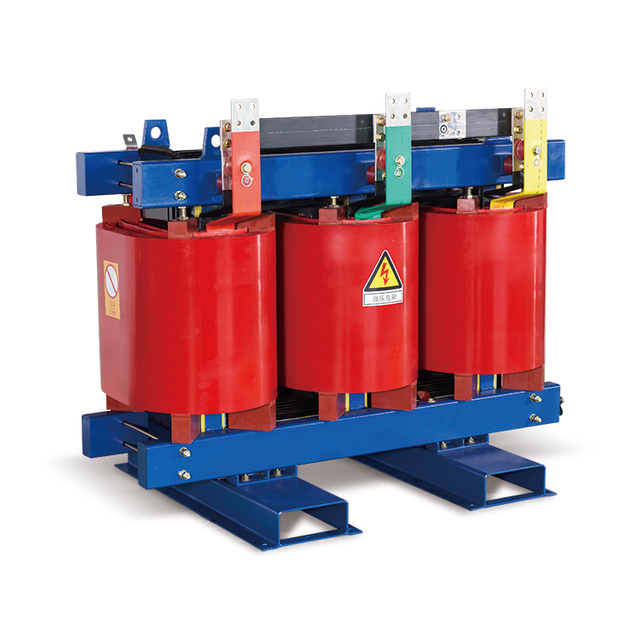
What makes this relevant to your efficiency objectives is not the size of the factory, but the technical architecture embedded in the products. Dry-type transformers are designed for low operational loss, low partial discharge, strong heat dissipation, and can operate at 120% load when equipped with forced air cooling, which directly supports better utilization efficiency in constrained installations. Oil-immersed transformers adopt laminated silicon steel cores, optimized coil structures, and vacuum drying processes to reduce no-load loss and no-load current while improving short-circuit withstand capability.
This technical foundation allows customization to move beyond cosmetic parameter changes and into structural efficiency engineering that matches how your network actually behaves.
Most standard models assume a theoretical load curve that rarely matches reality. The practical situation is long periods of low utilization punctuated by sharp peaks. In these conditions, no-load loss becomes the dominant energy cost, while fixed impedance and conservative thermal margins lead to avoidable voltage deviation and derating. The result is not only wasted energy, but also reduced flexibility when your network evolves.
Customization begins by correcting this mismatch. When design starts from your actual load data rather than catalogue averages, efficiency gains become structural rather than minor.
Loss distribution determines where energy disappears over 20 years of operation. By optimizing core material selection to reduce magnetization loss and adjusting winding design to balance copper loss against real load patterns, the efficiency shifts closer to your operating reality. Instead of peak efficiency at rated load that you rarely reach, you achieve sustained efficiency across the daily profile that defines your actual energy cost.
Winding architecture directly affects both electrical efficiency and mechanical reliability. Foil low-voltage windings improve ampere-turn balance, reduce circulating currents, and enhance heat dissipation through axial cooling ducts. These structural choices contribute to reducing loss concentration and limiting hot spots while improving resistance to sudden short-circuit forces.
The result is a double benefit—improved efficiency during normal operation and reduced risk of deformation or insulation fatigue under abnormal events, which means long-term efficiency that does not degrade prematurely.
High-frequency components from inverters and nonlinear loads increase iron loss and acoustic stress in poorly optimized cores. High-quality cold-rolled silicon steel, combined with optimized joint structures and surface treatments, can reduce no-load loss, limit no-load current, and suppress noise.
This is quite important because harmonic-rich environments magnify weaknesses in generic core designs. Customization allows the magnetic circuit to be shaped for the actual spectral conditions you face, thus improving efficiency without relying on oversizing.
Cooling is often treated as a safety feature rather than a tool to improve efficiency. In reality, thermal management determines how much of the copper and core design you can safely use. Dry-type designs equipped with cross-flow cooling fans and intelligent temperature controllers support higher load operation while maintaining low loss and stable insulation performance, which means that in actual operation, utilization can be closer to the optimal level on the basis of retaining thermal safety without over-provisioning capacity for a few extreme peaks.
Voltage stability directly influences downstream equipment efficiency. Motors, drives, and power electronics all suffer efficiency loss under undervoltage or excessive fluctuation. Customized regulation solutions address this problem at the source.
A practical reference is the on-load voltage-regulated distribution transformer service. By enabling continuous voltage correction under changing load, this type of configuration helps reduce reactive power circulation, limits unnecessary current increase, and keeps connected equipment operating within its optimal efficiency window. The result is system-level efficiency improvement that cannot be achieved through fixed-ratio transformers.

Oil-immersed transformers remain essential in dense distribution environments where high reliability and thermal stability are required. Structural details make the difference. Corrugated oil tanks compensate for volume changes, vacuum oil filling improves insulation integrity, and spiral coils with longitudinal oil ducts enhance heat transfer while maintaining strong mechanical stability.
A concrete example of this engineering direction can be seen in the S11 125kVA 10kV 400V OEM and ODM Tri-Phase Oil-Immersed Power Distribution Transformer. Such configurations are designed to reduce no-load loss and no-load current while improving thermal stability and short-circuit tolerance. It translates into consistent efficiency under continuous service, especially in networks where redundancy and uptime carry direct economic weight.

The initial purchase cost tells only a fraction of the efficiency. Energy loss through no-load loss, cooling inefficiency, and voltage instability accumulates year after year. So do the indirect costs of outages, derating, and premature insulation aging.
Customized transformers influence all three: they lower energy loss across realistic load conditions, reduce thermal and electrical stress that drives aging, and support more stable operation that minimizes intervention. That is why efficiency should be evaluated by lifecycle cost rather than theoretical parameters.
Customization only works when it follows your operational reality. Over-specifying exotic materials for benign environments, oversizing thermal systems that will never be used, or designing for load patterns that no longer exist can reduce returns.
Efficiency is improved when customization is grounded in accurate load data, environmental constraints, maintenance strategy, and expansion planning. Otherwise, even advanced designs risk being inefficient investments.
Efficiency in modern power systems is built at the interface between equipment and reality. Customized transformers create value because they adapt electromagnetic design, thermal behavior, and operational characteristics to how you actually run your network. They reshape loss distribution, stabilize voltage, improve utilization, and extend service life.
When treated as system efficiency tools rather than isolated components, customized transformers become part of your operational strategy rather than just another asset on the single-line diagram.
Q1: Does customization mainly improve no-load efficiency or full-load efficiency?
A: It improves both, but the largest gains often come from aligning the loss curve with your real operating load rather than chasing peak efficiency at rated capacity.
Q2: Are customized transformers harder to maintain over time?
A: No. When designed properly, they often reduce thermal stress and fault probability, which simplifies maintenance rather than complicating it.
Q3: Is on-load voltage regulation necessary for efficiency improvement?
A: In networks with frequent voltage fluctuation, distributed generation, or sensitive downstream loads, voltage regulation contributes directly to system-wide efficiency and equipment protection.