- All
- Product Name
- Product Keyword
- Product Model
- Product Summary
- Product Description
- Multi Field Search
Views: 0 Author: Site Editor Publish Time: 2026-02-17 Origin: Site

Power distribution planning often reaches a critical decision when determining the methods for the installation of transformers. The decision between pad-mounted and pole-mounted transformers has a great influence on the security, maintenance, and functioning of the system, and the approach to the development pattern of the grid in the city and rural areas. This choice is not merely equipment selection, but also influences the stable delivery of electricity to consumers and the successful adjustment of networks to increasing demand.
In order to make an appropriate decision, it becomes necessary to make a careful assessment of site requirements, possible dangers, consumption patterns, and overall ownership costs. Each variety has been developed to meet the requirements of specific applications, and it helps to make an informed assessment of the differences.
The type of transformer installation affects technical capabilities and integration in communities. In densely populated city zones, safety rules and land-use restrictions commonly support surface-level, fully enclosed arrangements. However, areas with sparse populations emphasize economical solutions and fast deployment, making elevated installation more appealing.
As a result, the decision impacts network reliability, servicing procedures, and the degree of public hazard risk. An improper type selection for the given locations could lead to operational problems and increased costs during the service life of the equipment.
Pad-mounted transformers are distribution devices placed on the ground enclosed in secure steel cabinets. They are widely used in residential areas, commercial districts, and distribution power systems relying on underground cables where overhead conductors are impractical or undesirable.
In underground cable setups, lines connect to the unit from beneath, avoiding visible wiring and reducing aesthetic disruption. Such a layout protects components from environmental elements while ensuring restricted public access. Loop-feed structures enable utilities to isolate faults but maintain power flow to nearby consumers.
The enclosed structure lowers risks of unintended contact and allows positioning nearer to reach consumption points, thereby enhancing voltage regulation and decreasing feeders and energy losses.
Pole-mounted transformers, installed on utility poles, link with overhead distribution conductors. They are common in the countryside and semi-rural locations where placing cables underground is economically unfeasible.
Pole-Mounted Transformers continue to exist due to a few requirements for ground preparation and the capability for prompt deployment. Utilities install them efficiently and overhead lines without extensive groundwork.
However, they create difficulties for servicing personnel in reaching the equipment and are vulnerable to climatic conditions, vegetation interference, and possible collisions from vehicles. Besides, their capacity is limited by their sizes, making them difficult to use in expanding urban load centers.
Site circumstances exert a strong influence over transformer choice. Pad-mounted transformers require prepared concrete bases, site clearance, and secure routes for maintenance vehicles. Although there are many preparations, they enable controlled service access.
Pad-mounted transformers are suitable for areas with underground cable systems and sufficient ground space. Business districts, schools, and residential buildings often choose them due to their ability to minimize visual intrusion and meet safety requirements.
In contrast, pole-mounted types are used for areas with very high installation costs or areas with difficult terrains that make it difficult to set up on the ground.
Public safety is a fundamental consideration in determining the installation places of transformers. Pad-mounted transformers feature resistant enclosures that minimize exposure to live parts, especially suitable for pedestrian areas and residential buildings.
Enclosed pad-mounted designs typically deliver better protection for the public through locked compartments and insulated entry points for cables, and can integrate fire containment and oil spill control measures.
Although installed above ground, pole-mounted transformers still have the risk of detached components or contact with lines during extreme weather. Overall safety effectiveness relies more on local circumstances than elevation alone.
Transformer capacity tends to be determined by network load growth and consumer concentration. Pad-mounted transformers often accommodate larger capacities and possibilities for modular growth, making them more appropriate for developing urban systems.
Ground-installed units manage higher kVA levels and permit simpler enhancements as usage increases. Pole-mounted transformers generally serve smaller demands and might require several units when consumption rises.
Flexibility in capacity, therefore, supports pad-mounted installation when future expansion is expected.
Although initial investment is important, the total cost in the full service period usually determines the real value. Accessibility, complexity of repairs, and length of interruptions all affect running expenditures.
Pad-mounted transformers provide secure ground-level access, enabling personnel to conduct examinations and fixes without specialized lifting devices, making maintenance safer and faster.
Pole-mounted varieties demand equipment for working at heights and traffic management in occupied zones, raising the difficulty of service and associated expenses.
As electrical distribution networks transition to more secure and flexible structures, producers need to supply products that balance performance, compliance, and dependability.
SHENGTE is a manufacturer that focuses on energy-saving and environmentally responsible power distribution equipment. With more than 15 years of transformer manufacturing experience, we produce oil-immersed transformers, dry-type transformers, combined transformer systems, prefabricated substations, and integrated electrical equipment. We have a strong production capacity, ranging from design, production, testing, and assembly in-house, ensuring consistent quality before delivery. We provide services for major grid authorities and project developers in both domestic and global markets, delivering standard and customized options suited to varied installation scenarios.
Modern city networks require equipment that can support underground distribution while maintaining functional adaptability. Combined box-type substations integrate switching, protective features, and voltage conversion into compact assemblies, suitable for restricted sites.
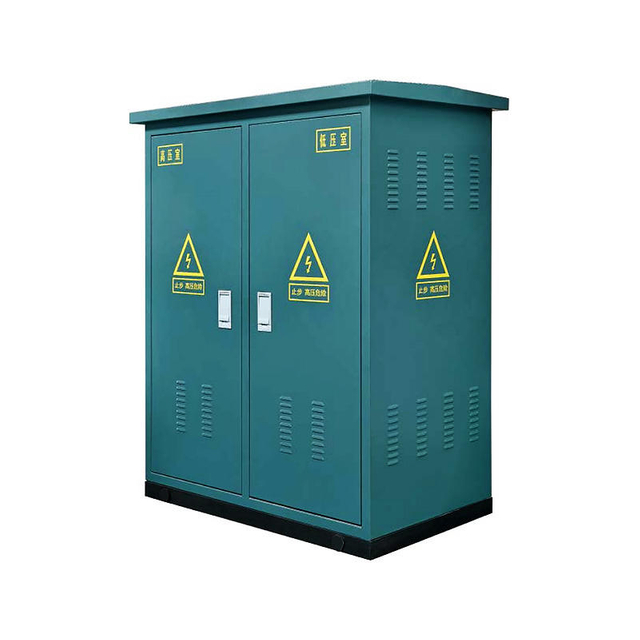
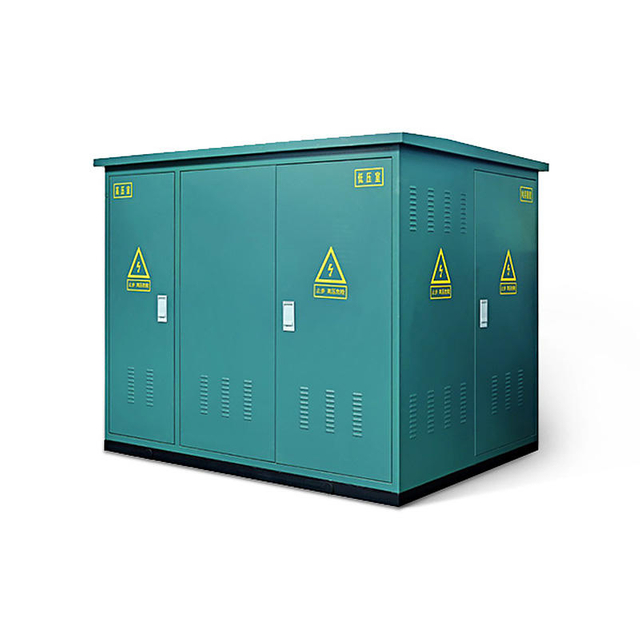
Integrated products like the ZGS11 1600kVA 10kV 0.4kV Dyn11 Connection Box Type Pad-Mounted Substation Transformer deliver substantial capacity conversion in sealed enclosures, suiting well commercial hubs, manufacturing areas, and housing projects where efficient land utilization is important. Such designs enhance protection while facilitating smoother incorporation into underground cable frameworks.

Specific installation calls for compact solutions, but gains advantages from ground positioning benefits.
More modest units, including the ZGS11 125kVA 10kV 400V Three Phase Combined Pad-Mounted Transformer, address educational facilities, clustered residences, or focused industrial demands where overhead installation might conflict with protection or appearance standards. These systems enable effective power delivery while retaining installation flexibility.

Choosing the proper transformer should assess site environments, expected load development, safety exposure, and maintenance logistics. No solution applies universally, and the proper option relies on location limitations and long-term network planning.
Essential assessment elements should include:
Whether underground or overhead distribution receives preference
Extent of anticipated load expansion
Applicable safety requirements in the installation zone
Degree of accessibility needed for servicing activities
Established objectives for overall ownership expenses
Addressing these aspects aligns transformer decisions with aims for network stability and functional effectiveness.
Moreover, the dry-type transformers provide enhanced protection and reduce servicing requirements through the lack of insulating fluid, achieving fire-resistant properties with less energy loss and noise pollution, making them appropriate for sensitive or environmentally protected locations for the load.
Q: Are pad-mounted transformers always safer than pole-mounted transformers?
A: Safety varies according to surroundings and installation standards. Pad-mounted varieties typically afford improved public protection in crowded zones because of their enclosed construction.
Q: Can pole-mounted transformers support expanding urban networks?
A: They handle preliminary demands, but city growth frequently necessitates larger-capacity surface solutions for adaptability and protection.
Q: Which installation type offers better maintenance efficiency?
A: Surface-mounted transformers usually supply simpler and more secure servicing entry, thereby shortening repair durations and lowering operational hazards.