- All
- Product Name
- Product Keyword
- Product Model
- Product Summary
- Product Description
- Multi Field Search
Views: 0 Author: Site Editor Publish Time: 2026-01-21 Origin: Site
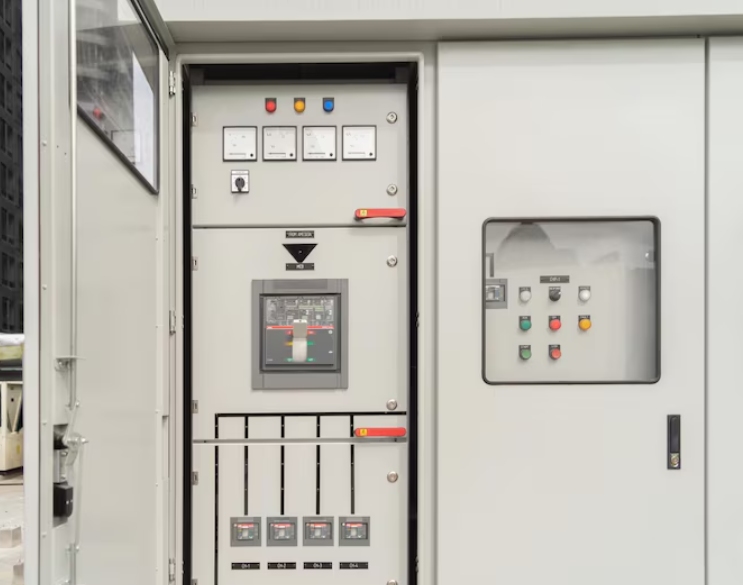

When a power network is designed or operated, stable voltage and steady current are just one of the components of this system. Equally important factors include fault separation, circuit management, and the ways of the operator’s contact with energized equipment. All these elements meet at a single point—switchgear.
Switchgear does not simply act as a house for breakers and meters, but also functions as an active management layer, which decides whether the disturbance is contained or grows into a widespread blackout. Poor choices in switchgear often become evident not during regular use, but under unusual circumstances—such as short circuits, excessive loads, maintenance mistakes, or harsh environmental stress. During those events, physical design and coordinated functions are more vital than normal ratings.
This article explores how various kinds of switchgear contribute to secure and reliable power management. It also discusses approaches to selection based on voltage range, operating environment, and long-term system performance, rather than isolated technical data.
Before choosing a specific cabinet type, you need to clarify what switchgear actually does within a power system.
Switchgear handles four main tasks, including switching, protection, control, and isolation. These tasks remain interconnected, since they influence each other in every operational situation. When a breaker opens, protection logic must have already detected an abnormal condition. When maintenance is required, isolation devices need to separate energized sections from accessible zones during servicing.
In practice, switchgear combines circuit breakers, disconnectors, grounding switches, current and voltage transformers, protective relays, and an interlocking system into a unified structure. The enclosure itself is a part of the safety design, defining boundaries for access and containing potential faults. This integration ensures that operations follow a defined sequence and that unsafe actions are mechanically or electrically blocked.
This organized approach ensures that normal switching avoids danger and that abnormal events trigger predictable, repeatable outcomes instead of rushed decisions.
Voltage level serves as the major element that separates switchgear designs into different groups.
At medium and high voltage levels, the consequences of failure escalate quickly. Arc energy increases, fault currents rise, and clearance distances become non-negotiable. High-voltage switchgear therefore focuses on controlled fault isolation and strict operating discipline rather than compactness.
Metal-clad construction, compartmentalization, and withdrawable breaker designs are structural responses to these risks. They allow you to isolate circuits, remove breakers for maintenance, and verify earthing status without exposing operators to live conductors. Interlocking systems enforce correct sequences, preventing actions such as closing a breaker onto an earthed circuit.
A representative example is the KYN28A-12 Indoor Metal-Clad Withdrawable High Voltage Switchgear. Its withdrawable structure, independent functional compartments, and mechanical interlocks are designed to support safe power reception and distribution at the 12 kV level. Priority should not be taken to speed or flexibility, but to predictable behavior during normal use and fault conditions.

Lowering voltage does not remove danger—it alters its nature.
Low-voltage switchgear operates where circuits branch out, and loads become diverse. Motor starts, lighting systems, power electronics, and auxiliary equipment all interact at this level. Faults are more frequent, but typically less severe, and the system must continue operating even as individual feeders are isolated.
Here, switchgear stability depends on mechanical robustness, thermal performance, and logical circuit arrangement. Busbar systems must handle high currents without excessive heating. Cabinets must allow flexible feeder configuration while maintaining clear separation between functional zones. Protection coordination becomes critical, as downstream faults should not propagate upstream.
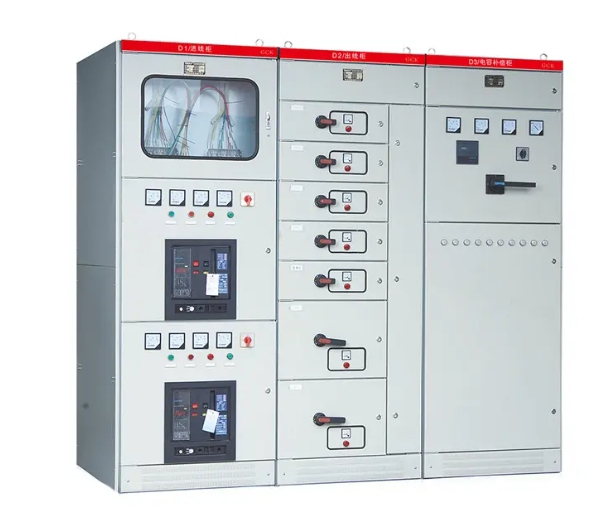
The GGD AC low-voltage distribution cabinet illustrates this role. Its modular frame, high breaking capacity, and strong dynamic stability support continuous operation in industrial and utility environments. Rather than focusing on arc containment at extreme voltages, this type of cabinet emphasizes load adaptability, heat dissipation, and long service life with minimal intervention.
Safety is not defined by ratings alone, but by physical arrangement.
In real installations, switchgear is exposed to dust, humidity, vibration, and human error. Structural design determines how these factors influence risk. Compartment separation limits fault propagation. Proper grounding ensures that exposed metal parts remain at a safe potential during abnormal conditions. Enclosure strength affects arc containment and pressure relief.
A well-designed cabinet guides behavior. Doors, partitions, and access points define where and how operators interact with equipment. When structural logic is clear, procedures are easier to follow, and mistakes are less likely to escalate into incidents.
This is why enclosure protection level, internal layout, and grounding continuity should be treated as primary selection criteria, not secondary details.
Most electrical accidents are procedural, not material.
Even skilled staff can make mistakes under the condition of limited time. Interlocking systems prevent small mistakes from causing damage. Mechanical interlocks physically stop wrong actions, while electrical interlocks prevent control signals from executing unsafe commands.
For example, a breaker cannot be moved into the service position unless it is open, and an earthing switch cannot close unless the circuit is isolated. These constraints are embedded into the switchgear structure, removing reliance on memory or judgment at critical moments.
Effective interlocking turns correct operation into the default path, not an optional choice, which is a defining feature of switchgear designed for long-term reliability rather than short-term convenience.
Selection should reflect system behavior, not just nominal data.
You should start by identifying the voltage level and fault current, but not end there. Consider how often switching occurs, how maintenance will be performed, and how the system may expand. Evaluate environmental exposure and the availability of skilled personnel.
High-voltage applications demand robust isolation and strict operating discipline. Low-voltage systems demand flexibility, thermal stability, and clear feeder organization. Choosing beyond actual requirements increases cost and complexity; choosing below them increases risk.
In many projects, SHENGTE is selected not for a single cabinet, but for our ability to supply coordinated high- and low-voltage switchgear under consistent production and quality standards. This consistency supports steady performance across the entire power control chain, which is essential for long-term system stability.
Q1: Is higher-rated switchgear always safer for a power system?
A: No. Safety depends on proper matching to voltage level, fault current, and operating conditions. Overspecification can complicate operation without improving protection.
Q2: Why are withdrawable designs common in high-voltage switchgear?
A: They allow physical isolation and safer maintenance while keeping busbars energized, reducing downtime and operator exposure.
Q3: Can one switchgear type handle both control and protection effectively?
A: Yes, if it is designed with integrated protection logic, proper compartmentalization, and coordinated interlocking from the outset.