- All
- Product Name
- Product Keyword
- Product Model
- Product Summary
- Product Description
- Multi Field Search
Views: 0 Author: Site Editor Publish Time: 2026-02-26 Origin: Site
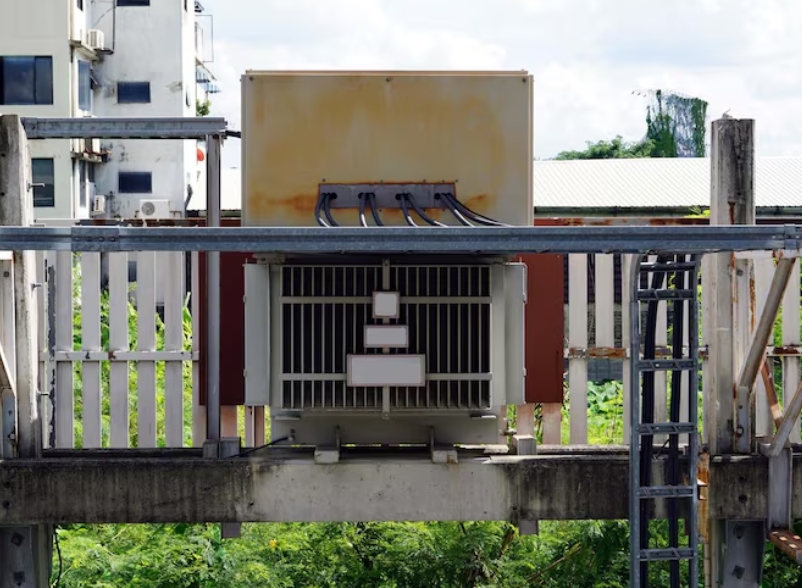
The selection of distribution transformers exerts considerable influence upon network dependability, operational safety, maintenance approach, and overall usage economics. With rising load density and increasingly complex installation environments, the decision between dry-type and oil-immersed transformers has evolved beyond ordinary purchasing decisions into a strategic engineering choice.
Transformers are widely used in commercial buildings, underground facilities, industrial parks, or outdoor utility zones. Each environment imposes different requirements for insulation safety, cooling performance, fire protection, and maintenance accessibility.
Modern evaluation processes are also not limited to nominal capacity ratings alone. Technical experts now commonly consider operational risk, installation constraints, lifecycle energy losses, and long-term maintenance impact. Therefore, selecting the right transformers is a systematic decision integrating engineering performance, economic implications, and safety considerations.
Systematic assessment generally commences with careful examination of location-specific circumstances:
Placement in enclosed structures versus external environments
Exposure levels to moisture, particulate matter, or chemically aggressive atmospheres
Magnitude of demand variation and intensity of peak consumption periods
Availability of natural airflow or supplementary cooling provisions
Applicable fire prevention codes and occupant evacuation stipulations
Practical accessibility for routine inspection and planned servicing schedules
Deployments situated in restricted interior spaces or densely occupied facilities typically emphasize enhanced fire resistance properties and reduced servicing necessities. External substation arrangements and heavy industrial compounds ordinarily prioritize mechanical robustness and superior thermal handling characteristics.
Following a clear definition of placement conditions, attention naturally shifts toward understanding distinctive behavioral responses exhibited by each transformer category when subjected to electrical loading and thermal stresses.
Although both categories operate according to identical electromagnetic principles, fundamental differences in dielectric medium and thermal management approaches produce markedly distinct operational profiles.
Dry-type transformers enclose winding assemblies in solid epoxy-based insulation compounds while depending upon ambient air circulation for heat removal, thereby eliminating liquid insulating medium. Oil-immersed transformers utilize specialized insulating fluid, serving as a dielectric and heat transfer function.
Each architectural approach delivers particular benefits depending upon the intended application context.
Dry-type transformers, especially those employing cast resin encapsulation, demonstrate notable capability for accommodating temporary capacity excursions whenever supplemented with forced ventilation systems. These units characteristically maintain modest running dissipation levels, subdued acoustic output, and consistent thermal behavior despite irregular demand patterns. Numerous contemporary configurations safely sustain operation at approximately 120% of nominal rating under enhanced airflow conditions while preserving dielectric integrity. Additionally, they function reliably in elevated humidity environments without necessitating elaborate drying procedures following temporary de-energization.
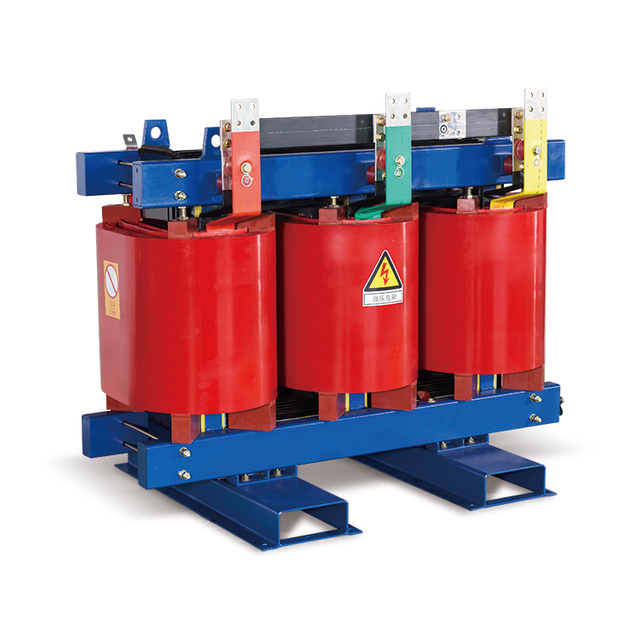
One representative example is the SCB10 2000kVA 6kV 400V Two Winding Three Phase Cast-Resin Dry-Type Distribution Transformer, which is widely used in commercial buildings, transport hubs, and industrial complexes where safety, low noise, and minimal maintenance are essential.

Oil-immersed transformers, conversely, provide exceptionally consistent thermal regulation through fluid circulation mechanisms and robust mechanical construction that substantially enhances short-circuit endurance characteristics. The insulating medium also offers superior heat conduction properties, thereby moderating dielectric deterioration rates and extending operational duration under sustained heavy loading conditions. These attributes render oil-immersed configurations particularly advantageous in exterior substation arrangements and demanding industrial distribution networks. Consequently, comparative performance assessment depends predominantly upon specific placement environment rather than inherent technological superiority.
Protection imperatives display considerable variation across different application contexts. Interior deployments situated proximate to occupied areas or sensitive equipment necessitate stringent minimization of combustion hazards and effective contamination control, while exterior locations generally emphasize sustained functional durability and straightforward servicing procedures.
Dry-type transformers function entirely without a liquid insulating medium, thereby eliminating possibilities of fluid escape and associated requirements for periodic oil condition assessment. Their essentially maintenance-free construction, inherently flame-resistant dielectric materials, and absence of contamination risks render them especially appropriate for consumption hubs in commercial and infrastructural settings.
Oil-immersed transformers, although featuring advanced sealed enclosure designs that enhance overall reliability, nevertheless necessitate scheduled evaluation of insulating fluid properties and sealing integrity throughout extended service periods. Nevertheless, contemporary hermetically sealed tank constructions have substantially diminished required servicing frequency while providing exceptional resistance against lightning surges, mechanical shocks, and electromagnetic disturbances, thereby establishing suitability for industrial and utility distribution networks.
Servicing preference consequently aligns predominantly with practical accessibility constraints and available maintenance resources rather than fundamental technological restrictions.
Economic assessment of transformers increasingly encompasses considerably more than initial acquisition expenditure. Technical specialists ordinarily conduct comparative analysis encompassing complete service-life efficiency, ancillary installation requirements, cumulative energy dissipation, and anticipated servicing investments.
Dry-type transformers frequently yield noticeable reductions in deployment expenditures in enclosed environments through the elimination of specialized fluid containment provisions, additional fire separation barriers, and elaborate ventilation arrangements. Straightforward installation procedures and negligible ongoing servicing demands further diminish operational overhead in commercial settings.
Oil-immersed transformers commonly exhibit more favorable initial procurement costs per unit capacity and superior thermal dissipation efficiency in external and industrial applications, thereby generating advantageous complete usage economics across substantial capacity distribution systems.
One representative example is the S11 2000kVA 10kV 400V Electrical Three-Phase NLTC Oil Cooled Type Distribution Transformer, which reduces no-load loss while maintaining robust short-circuit endurance properties, resulting in widespread adoption in industrial distribution grids and outdoor substations.
The final economic value, therefore, hinges primarily upon relative significance assigned to deployment expenditures, operational dissipation characteristics, or servicing requirements in specific project circumstances.

Ultimate transformer dependability emerges from a combination of engineering specifications and fabrication accuracy, systematic quality verification procedures, and reliable post-delivery technical assistance.
Standard assessment criteria ordinarily encompass:
Internal control over design development and production sequences
Conformity with IEC specifications and additional international protocols
Certification documentation for short-circuit withstand and routine performance verification
Manufacturing capacity and delivery consistency records
Availability of competent installation guidance and ongoing technical support provisions
In many modern power distribution projects, engineers tend to choose suppliers with integrated design, production, and service capability.
SHENGTE is a transformer manufacturer with more than fifteen years of specialized manufacturing experience. Our products have met IEC standards and gained ISO9001 certification. We have a wide range of products, including dry-type and oil-immersed transformers, substations, and integrated distribution equipment, which are supported by in-house testing and technical service teams. Such comprehensive capabilities substantially reduce engineering uncertainties and enhance deployment reliability across both domestic and international projects.
Supplier competence consequently constitutes an essential component in overall project risk management rather than merely conventional procurement consideration.
Transformer category determination achieves considerably greater clarity when structured systematically according to application-specific priorities rather than preconceived technological preferences.
Practical decision sequences frequently proceed through the following logical progression:
1. Clearly establish the placement environment and applicable protection stipulations.
2. Thoroughly assess anticipated consumption characteristics and overload tolerance requirements.
3. Carefully compare practical servicing accessibility constraints.
4. Conduct a comprehensive analysis of complete usage cost implications.
5. Verify supplier technical competence and available support services.
6. Confirm provisions for subsequent capacity enlargement or configuration modification.
Dry-type transformers ordinarily are most appropriate in interior deployments where enhanced fire resistance properties, subdued acoustic emissions, and substantially reduced servicing necessities represent primary objectives. Oil-immersed transformers continue demonstrating optimal suitability across external and industrial distribution arrangements whenever superior thermal dissipation capability and mechanical endurance constitute dominant considerations.
Appropriately matched transformer category selection consequently ensures sustained operational dependability, enhanced energy efficiency, and elevated safety performance throughout the entire service duration.
Q1: Can dry-type transformers fully replace oil-immersed transformers?
A: Negative. Dry-type configurations demonstrate particular effectiveness in enclosed and protection-critical deployments, while oil-immersed varieties maintain clear advantages across external and heavy industrial distribution responsibilities.
Q2: Are oil-immersed transformers still energy efficient?
A: Affirmative. Contemporary core lamination techniques and refined fabrication methodologies have substantially diminished no-load dissipation levels while elevating overall efficiency characteristics compared with earlier generations.
Q3: Which transformer is safer for commercial buildings?
A: Dry-type transformers generally receive preference in commercial structures owing to inherent combustion resistance properties, absence of contamination risks, and negligible ongoing servicing requirements, thereby facilitating secure placement proximate to occupied zones.