- All
- Product Name
- Product Keyword
- Product Model
- Product Summary
- Product Description
- Multi Field Search
Views: 0 Author: Site Editor Publish Time: 2026-09-17 Origin: Site
1.What 12kV Air Insulated Switchgear Is and What It Does
2.AIS and GIS: Insulation Medium, Footprint, and Maintenance Trade-offs
3.12kV AIS Selection Checklist: Ratings, Protection, and Project Data
4.SHENGTE KYN28A-12 High-Voltage Switchgear in a 12kV AIS Specification
Selecting a 12kV panel is an engineering decision, not simply a cabinet purchase. The project team must match voltage, load current, insulation coordination, fault duty, grounding, protection, room conditions, and maintenance access. This guide explains what air insulated switchgear does, how to read its ratings, and when an air switchgear arrangement is practical. It also shows how to review a 12kV configuration such as KYN28A-12 against the actual single-line diagram and site data.
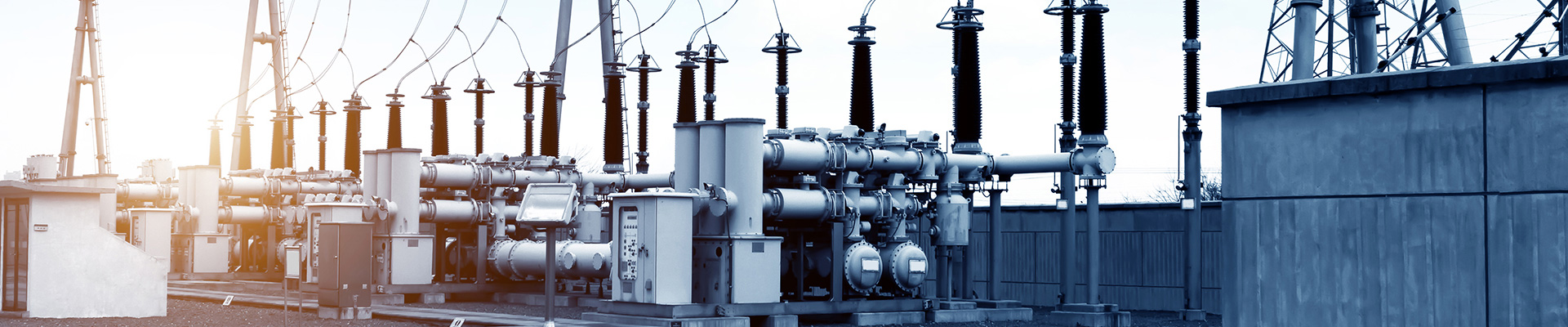
In practical terms, air insulated switchgear is a metal-enclosed medium-voltage assembly in which air provides the main insulation around live conductors, while grounded compartments and barriers control access. The assembly receives and distributes power, switches feeders, isolates equipment, measures electrical conditions, and clears faults through coordinated protection.
The 12kV label simply shows the basic voltage class. However, it does not give you the full specification. You need to check the rated voltage and the operating frequency. Also, verify the continuous current for every single feeder and bus section. Make sure to look at the power-frequency and impulse withstand levels. Furthermore, confirm the short-time withstand current and the peak withstand current. Engineers must pull these specific values from the load schedule and the fault study. The data also relies on the grounding method and the insulation-coordination review. A panel might carry normal current without any issues. Even so, it can still be the wrong option. This problem occurs if its interrupting or withstand capacity is lower than the calculated fault level. For this AIS configuration, physical clearances and internal barriers matter a lot. They must completely support the chosen insulation levels under the actual working environment.
Review the circuit breaker, busbar system, cable compartment, earthing switch, current and voltage transformers, protection relay, shutters, mechanical and electrical interlocks, operating mechanism, and metal enclosure as one coordinated system. The breaker interrupts current; the busbar carries and divides it; CTs and VTs provide measurement signals; relays issue trip commands; and interlocks prevent unsafe sequences. In air insulated switchgear, compartment segregation and shutters are important because service work must be possible without exposing operators to adjacent energized sections.
The question of air insulated switchgear vs gas insulated switchgear should be answered through project constraints rather than a universal technology ranking. Air-insulated assemblies use clearances, barriers, and accessible compartments. Gas-insulated assemblies place conductors in sealed enclosures and require a defined gas-management and service approach. The difference between air insulated and gas insulated switchgear therefore affects installation, inspection, extension, and end-of-life planning as much as it affects the enclosure itself.
For an indoor AIS room, establish phase-to-phase and phase-to-earth clearances, cable termination space, ventilation, access doors, and the route for lifting and replacement. Gas-insulated equipment can reduce the active footprint in some layouts, but the project still needs room for interfaces, pressure or gas-handling procedures, and service work. The correct comparison is a documented set of electrical, civil, environmental, and lifecycle requirements.
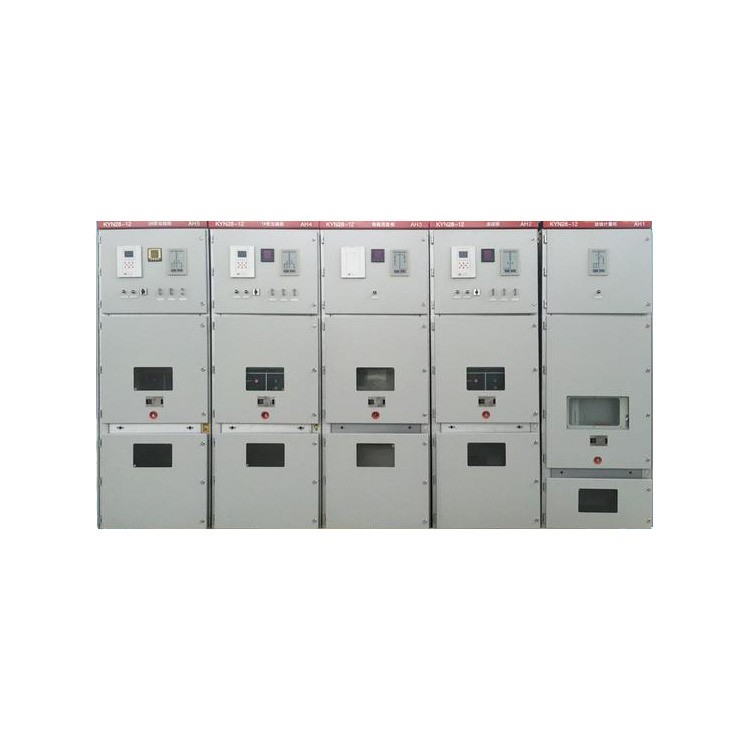
Specify contamination, humidity, altitude, temperature, dust, and ventilation before selecting an enclosure. Check front and rear working clearances, cable bending radius, lifting routes, earthing access, and whether future extension can be completed without unsafe temporary arrangements.
Air switchgear is often considered for indoor substations, industrial plants, utility distribution, secondary substations, and motor-starting feeders where a maintainable metal-compartment layout is available. Suitability depends on the required ratings, room size, contamination control, operating procedures, and continuity objective. These criteria are more useful than choosing a technology solely because it has a familiar name.
An AIS air insulated switchgear review should follow the electrical study first and the catalogue second. Collect the single-line diagram, load list, normal and emergency currents, fault level, grounding arrangement, transformer data, protection philosophy, cable schedule, and expansion plan. Then request a configuration that can be checked line by line against those inputs.
First, make sure to verify the breaker interrupting duty. You must also review the busbar and feeder current levels. Next, check the specific CT and VT ratios along with their equipment classes. It is highly important to confirm all relay functions. Furthermore, carefully inspect the trip and close circuits. You should also evaluate the earthing-switch duty. After doing this, assess the interlocking logic and review the insulation coordination.
In addition, examine the system selectivity with both upstream and downstream devices. Finally, confirm that your arc-fault mitigation strategies fit the actual safety requirements. All safe operating procedures must directly match the detailed site risk assessment. A nominal 12kV rating is only the starting point; the complete protection study determines whether the proposed air insulated switchgear can perform its intended duty.
Review the number and segregation of compartments, shutter operation, service and test positions, cable entry, gland plates, busbar access, lifting points, and replacement paths. Confirm that the earthing switch cannot be closed onto an energized circuit and that the breaker cannot be moved between positions in an unsafe state. Include spare parts, inspection intervals, relay testing, and operator training in the lifecycle plan. This turns a drawing review into a usable maintenance strategy.
The air insulated transformer market may influence supplier capacity and product availability, but market language cannot replace project evidence. Without authenticated market data, it is not responsible to state market size, share, or growth figures. Use the market as a procurement context, then return to voltage, current, fault duty, environmental conditions, and service support when comparing offers.
SHENGTE KYN28A-12 is an indoor metal-armoured withdrawable high-voltage switchgear option for power reception and distribution, large-motor starting, and applications in power plants, industrial facilities, mining enterprises, and secondary substations. Its documented functional scope includes control, protection, real-time monitoring, and measurement. In a project schedule, describe the product as air-insulated switchgear only after the required electrical and civil conditions have been confirmed.
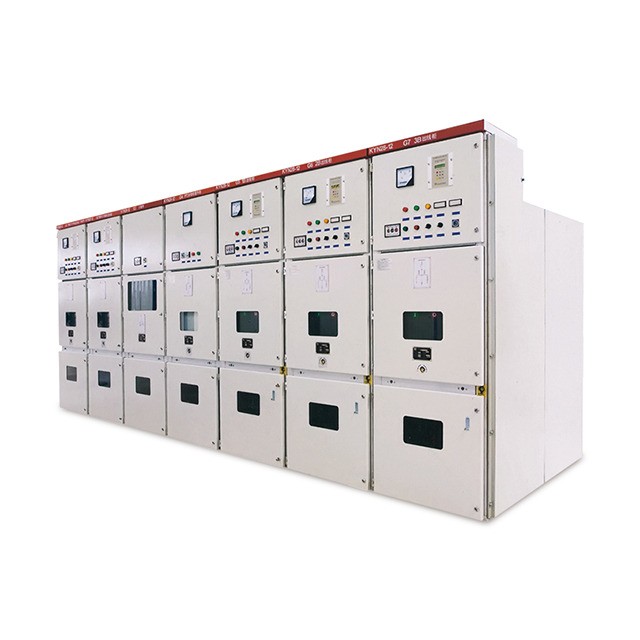
The KYN28A-12 arrangement can be reviewed for incoming, outgoing, and motor-related duties where a withdrawable construction supports the operating sequence. The final circuit list still determines breaker duty, instrument-transformer selection, relay functions, cable interfaces, and interlocks. The complete single-line diagram should be evaluated instead of assuming that one standard arrangement fits every 12kV room.
You can choose from several tested vacuum-breaker models. These options include the VS1 (ZN63A-12), VD4, HS (ZN82-12), and VEP (ZN96-12). Cable inlet, outlet, and connection cabinets come in specific sizes. The width is either 800 or 1000 mm. The depth can be 1500, 1660, or 1800 mm. All of these units have a standard height of 2300 mm. Overhead inlet and outlet setups share similar measurements. They feature a width of 800 or 1000 mm. Their depth is 1660 or 1800 mm, and the height remains at 2300 mm. The standard phase spacing starts at 150 mm. However, this distance changes based on the cabinet size. It increases to 210 mm for the 800-width setups. For the 1000-width designs, the spacing is 275 mm. Always check your chosen layout before making a final decision. You must review the available room space. Also, verify the cable paths and ensure proper access for future maintenance work.
Provide the single-line diagram, voltage and current schedule, calculated fault level, protection requirements, cable entry direction, room dimensions, environmental conditions, maintenance clearances, expansion plan, and continuity target. At SHENGTE, we can then review whether the KYN28A-12 configuration and its selected breaker option align with the project. That evidence-based process is the right way to specify air insulated switchgear for a 12kV installation.
Choose air insulated switchgear by matching ratings to load, fault, grounding, insulation, and protection studies rather than relying on a 12kV label alone. Compare AIS and GIS through clearances, environment, footprint, service access, and lifecycle procedures. Use project data to decide whether air switchgear fits the application, and treat SHENGTE KYN28A-12 as a verified indoor metal-armoured withdrawable example whose final suitability depends on the complete specification.