- All
- Product Name
- Product Keyword
- Product Model
- Product Summary
- Product Description
- Multi Field Search
Views: 0 Author: Site Editor Publish Time: 2026-08-13 Origin: Site
1.What Are LV and MV Switchgear?
2.Key Differences Between LV and MV Switchgear
3.Selection, Applications, and Cost Factors in 2026
4.Recommended Product – SHENGTE High Voltage Switchgear
Reliable switchgear is essential for safe power distribution in factories, commercial buildings, substations, renewable-energy facilities, and utility networks. It controls normal power flow, isolates equipment for servicing, and interrupts faults before they damage cables, transformers, motors, or production systems.
For a 2026 power project, choosing between low voltage switchgear, medium voltage switchgear, and high voltage switchgear requires more than checking the nominal voltage. Engineers must also evaluate fault-current levels, insulation requirements, installation space, environmental exposure, monitoring functions, and lifecycle costs. This makes the correct selection of low and medium-voltage switchgear a critical part of electrical-system planning.
At SHENGTE, we provide switchgear solutions for power reception, distribution, control, protection, monitoring, and measurement. This guide explains the difference between LV and MV switchgear, introduces air-insulated equipment, and presents our KYN28A-12 indoor metal-clad withdrawable switchgear for 12kV distribution systems.

Low-voltage switchgear usually supports power setups running under 1kV. This equipment sends power right to the end users. People frequently place it inside manufacturing plants and retail spaces. It also appears in motor-control centers and facility utility networks.
Medium voltage switchgear handles a greater power distribution tier. The provided project outline specifies a normal span from 1kV up to 52kV. It points out several standard uses. These include public utilities, green energy sites, and mining works. Industrial facilities and substations also rely on this gear.
Both LV and MV switchgear blend several key tasks. They handle switching, isolation, safety, regulation, and measurement. Circuit breakers stop unusual power flows. Meanwhile, disconnect switches create safe gaps. Protective relays spot system errors. At the same time, meters and sensors supply active data. Current power switchgear panels can link up with oversight networks. Because of this connection, staff can track voltage and current levels. They can also check alerts and machine health right from the main control hub.
The names MV and LV switchgear point to distinct voltage groups. They do not represent rival items fighting for one job. For instance, a plant might rely on MV equipment to take in and route main power. Then, transformers step down that power level. Finally, LV panels feed the actual machines and facility lights. Within this setup, LV & MV switchgear run side by side. They function as linked pieces of a single, organized power network.
A practical air-insulated switchgear definition is an electrical switchgear assembly that relies primarily on atmospheric air to provide insulation clearance between energized components and grounded structures. It is widely used because its components are comparatively accessible and its construction is familiar to many industrial maintenance teams.
When comparing the types of air-insulated switchgear, buyers may encounter fixed metal-enclosed panels, withdrawable metal-clad equipment, indoor distribution lineups, and outdoor substation arrangements. Conventional air switchgear requires sufficient clearance between energized components, while withdrawable designs allow the circuit breaker to be moved from its operating position for inspection or replacement.
Dry air switchgear is a more specific design category and should be evaluated according to the manufacturer’s technical documentation. It should not automatically be treated as identical to every conventional AIS arrangement.
The clearest difference is operating voltage, but a higher voltage affects nearly every other design requirement. As voltage increases, the equipment generally requires more demanding insulation coordination, greater electrical clearances, stronger fault interruption, and more specialized protection.
Typical voltage class | Below 1kV | Commonly 1kV to 52kV |
Main function | Final and local distribution | Primary industrial or utility distribution |
Typical loads | Motors, lighting, HVAC, building systems | Transformers, large motors, feeders, substations |
Insulation demand | Lower | Higher |
Maintenance complexity | Generally simpler | More specialized |
Common locations | Buildings and factory electrical rooms | Plants, substations, utilities, and renewable projects |
Fault-current requirements must be calculated independently of nominal voltage. An LV panel in a large industrial facility may experience a considerable prospective short-circuit current, while an MV feeder requires protection devices matched to its network voltage, transformer capacity, and operating arrangement.
The selected circuit breakers, relays, busbars, and enclosures must therefore be based on an electrical-system study. Simply choosing equipment labeled “LV” or “MV” does not guarantee that it can safely handle the expected load and fault conditions.
MV equipment also tends to have more complex insulation and maintenance requirements than LV equipment. This affects technician training, testing procedures, spare-part planning, and the time required for scheduled shutdowns.
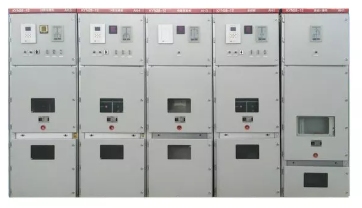
A practical switchgear selection guide begins with the single-line diagram and load schedule. Engineers should confirm the system voltage, continuous current, short-circuit level, feeder quantity, transformer capacity, motor-starting requirements, and required redundancy.
Common switchgear applications include industrial motor distribution, transformer protection, commercial building services, renewable-energy collection systems, mining facilities, and utility substations. The installation environment is equally important. Humidity, conductive dust, salt, chemicals, altitude, ambient temperature, and ventilation can affect insulation performance and enclosure selection.
For air-insulated switchgear, the electrical room should provide suitable working clearances, cable-routing space, access aisles, and environmental control. Engineers should also consider future expansion. Reserving space for additional feeders may cost less than replacing a complete lineup when the facility grows.
A useful switchgear cost guide should consider more than the initial equipment quotation. Important cost elements include:
· Switchgear panels, circuit breakers, relays, and metering devices
· Electrical-room construction, ventilation, and environmental control
· Cable routing, installation labor, testing, and commissioning
· Routine maintenance, replacement components, and spare parts
· Downtime risks and future capacity expansion
· Monitoring, communication, and automation requirements
LV equipment is normally less complex than comparable MV equipment, but the final price depends on current ratings, fault capacity, compartment design, protection configuration, and automation. A future-ready system may require a higher initial investment but can reduce the cost of later modifications.
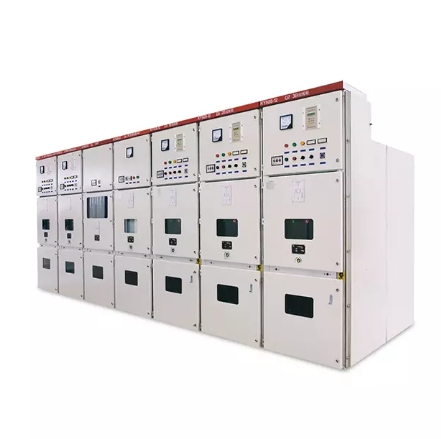
Our SHENGTE high-voltage switchgear range includes the KYN28A-12 indoor metal-clad withdrawable switchgear. Although the product category uses a high-voltage description, the KYN28A-12 is a 12kV medium voltage switchgear solution intended for power reception, distribution, large-motor starting, control, protection, monitoring, and measurement.
The product has a rated voltage of 12kV and a rated frequency of 50Hz. Main and branch busbar current options include 630A, 1250A, 1600A, 2000A, 2500A, 3150A, and 4000A. The enclosure protection level is IP4X, while open compartments and doors are rated IP2X.
Its withdrawable metal-clad structure supports easier inspection, servicing, and replacement of major components. We recommend this product for power plants, industrial and mining facilities, and secondary substations that require reliable 12kV power distribution.
At SHENGTE, we design our products to support organized compartmentation and practical maintenance. The KYN28A-12 is especially suitable for projects that prefer accessible air-insulated equipment and need dependable control and protection for medium-voltage feeders.
The difference between LV and MV switchgear begins with voltage but extends to insulation, protection, fault interruption, installation environment, maintenance, space, and total cost. Low-voltage switchgear normally distributes electricity close to final loads, while medium-voltage switchgear manages primary industrial and utility distribution. High-voltage switchgear is used for higher-level grid and transmission duties.
A reliable selection process should define the electrical duty, calculate fault levels, evaluate environmental conditions, and compare lifecycle costs. At SHENGTE, our KYN28A-12 provides a 12kV air-insulated and withdrawable solution for dependable power reception, distribution, protection, monitoring, and control.