- All
- Product Name
- Product Keyword
- Product Model
- Product Summary
- Product Description
- Multi Field Search
Views: 0 Author: Site Editor Publish Time: 2026-02-04 Origin: Site


Modern power systems operate in environments shaped by dense urban loads, stricter safety regulations, and increasing expectations for lifecycle efficiency. Fire-resistant characteristics, moisture resistance, level of partial discharge, margins of cooling, and maintenance simulation have become the determinants of whether the project will remain stable for decades or become a recurring operational risk. The dry-type transformer, especially the epoxy resin cast transformer, has addressed such challenges.
Urban substations, commercial complexes, transport infrastructure, and industrial campuses share one constraint: equipment must perform safely near people and sensitive assets. Oil containment, ventilation design, and fire isolation once dominated transformer room planning, but the technology of dry-type transformers has changed by shifting risk control from external infrastructure to internal design.
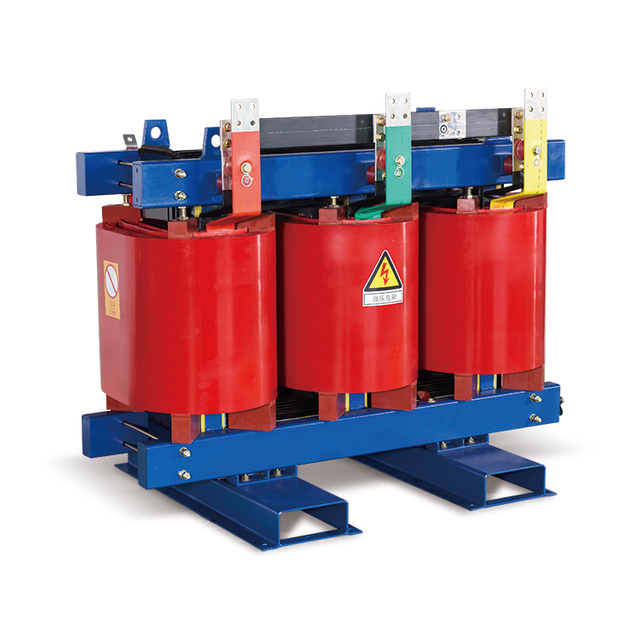
Dry-type transformers isolate current through solid insulation systems rather than flammable liquids. Their cores and windings are not immersed in oil, eliminating leakage and pool-fire scenarios. Epoxy resin cast structures provide flame retardancy, stable dielectric behavior, and pollution-free operation, which allows installation directly inside load centers such as hospitals, data facilities, and commercial buildings.
These characteristics reduce the need for oil pits, fire walls, and complex ventilation paths. The result is not only higher intrinsic safety but also simpler civil design and more predictable compliance with building codes.
Humidity is a silent reliability threat. In coastal regions, underground substations, and tropical climates, moisture accelerates insulation aging and increases surface discharge risk.
Epoxy resin cast transformers maintain stable performance at 100% humidity and can resume operation after shutdown without pre-drying procedures. This characteristic removes seasonal recommissioning routines and limits moisture-driven degradation in partial discharge behavior, which means fewer environmental constraints during site selection, while reducing dependence on controlled HVAC conditions.
Safety alone does not justify a specification. Electrical performance over time remains the foundation of asset value. Dry-type transformers are engineered around controlled losses, stable thermal profiles, and predictable insulation behavior.
Low no-load loss and load loss reduce continuous thermal stress on windings and cores. Vacuum epoxy casting further lowers partial discharge levels by removing internal voids and stabilizing the electric field distribution.
A decrease in discharge activity slows the aging process of the insulation, provides protection of the dielectric margin during transient overvoltages, and diminishes the acoustic noise produced by micro-discharges. Within a 20- to 30-year service life, these factors have a much more significant influence on the failure probability than the short-term efficiency characteristics.
Dry-type transformers rely on air as the cooling medium. Designs typically support natural air cooling for nominal operation and forced air cooling for peak demand periods.
Under forced air conditions, epoxy resin cast units can operate at up to 120% of rated load without exceeding thermal limits. Axial cooling ducts integrated into winding structures enhance airflow through high-loss regions, keeping conductor temperature rise within stable bounds.
For network planning, this provides a controlled buffer against load growth, seasonal demand spikes, and temporary network reconfiguration.
Grid disturbances rarely arrive gently. Short circuits, inrush currents, and voltage transients impose mechanical forces that test coil integrity and core stability. Internal architecture, therefore, becomes a reliability multiplier.
High-voltage windings produced through vacuum casting with filled epoxy resin achieve low discharge levels and high dielectric strength. Reinforcement with glass-fiber mesh plates on inner and outer winding walls increases resistance to radial and axial deformation.
This construction improves tolerance to sudden short-circuit forces, thus reducing the risk of insulation cracking or conductor displacement during fault events.
Cores assembled from high-grade cold-rolled silicon steel sheets with fully inclined step-lap joints reduce magnetic flux discontinuities, which lowers no-load current and core loss while suppressing magnetostriction-driven vibration.
Surface epoxy treatment and F-class binding straps further stabilize the structure, leading to lower background noise and more consistent electrical characteristics over repeated thermal cycles.
Transformer performance does not exist in isolation. Human access, airborne contamination, and mechanical exposure all shape operational outcomes.
For dry-type transformers, the enclosures available are IP20, IP23, IP30, and IP33, depending on the level of exposure. The materials available for the enclosures range from aluminum alloy to cold-rolled steel and finally to stainless steel, giving the user the flexibility to select the degree of corrosion resistance, strength, and aesthetic integration with other equipment.
Appropriate enclosures can reduce the chances of accidental touching, reduce dust accumulation, and improve the stability of airflow around the winding, thus helping to attain thermal consistency.
System-level reliability often depends on correct capacity matching and thermal headroom rather than theoretical maximum ratings. Two capacity classes illustrate how application context drives technical choice.
In office complexes, transit facilities, and medical campuses, load profiles vary from day to day while the space remains limited. The SCB11/10 800 KVA 10 / 11-0.4 kV 3 Phase High Voltage Cast Resin Dry Type Power Transformer is suited for such applications, given the features of compact size, low noise, resistance to moisture, and stable forced-air overload. Such characteristics allow installation near demand centers without complex oil containment or dedicated fire isolation structures.

Industrial parks and data facilities concentrate continuous load with limited tolerance for voltage deviation or thermal drift. The SCB10 2500 KVA 10 / 0.4 kV 3 Phase High Voltage Cast Resin Dry Type Power Transformer supports high current density operation with controlled losses, reinforced mechanical structure, and intelligent temperature monitoring. In practice, this class of transformer becomes the electrical backbone for production stability and predictable maintenance planning.

Datasheets only describe equipment, but do not reveal production discipline, testing culture, or service continuity. For grid assets designed to operate for decades, these factors influence total ownership cost as much as electrical performance.
Manufacturers with a strong background in the production of distribution transformers and adherence to ISO9001 quality management system certification and IEC standards ensure controlled sourcing and testing processes and repeatable test results with respect to the used raw materials.
In-house testing facilities, traceability through the entire process, and standardized inspection procedures minimize the variance between the nominal design and the actual delivered equipment.
Projects rarely end at delivery. Engineering coordination, commissioning support, and fault diagnosis often determine whether a commissioning delay becomes a schedule setback or a financial liability.
Organizations that integrate design, production, testing, installation guidance, and after-sales service into one workflow reduce communication friction and accelerate fault resolution.
Within the dry-type transformer sector, SHENGTE operates as a specialized manufacturer focused on distribution-level equipment for green and energy-efficient power systems. Established in Guangdong, China, we maintain more than 12,000 square meters of production facilities and over 15 years of transformer manufacturing experience.
Our product scope includes epoxy resin cast dry-type transformers, oil-immersed transformers, prefabricated substations, and high- and low-voltage electrical equipment, with verified compliance to IEC standards and ISO9001 quality systems. Our production covers the full chain from raw material procurement and electromagnetic design to routine testing, assembly, and commissioning.
This integrated structure allows consistent control over insulation processes, winding accuracy, thermal design validation, and factory acceptance testing. In practical terms, it enables you to source equipment from a supplier capable of aligning design intent with delivered performance, while also providing engineering coordination and long-term service continuity across complex distribution projects.
A: Can dry-type transformers operate under high load conditions continuously?
A: Yes. With appropriate cooling system design and air assistance, epoxy resin cast transformers can be operated at 120% of their loading for specified periods while ensuring thermal stability.
Q: Are there special maintenance procedures for dry-type transformers?
A: Oil testing and replacement routines are no longer necessary. Visual checks, temperature monitoring system checks, and ventilation system cleaning will suffice.
Q: Can dry-type transformers meet the requirements for international projects?
A: Models developed under the ISO 9001 process and IEC-tested are widely recognized on the commercial, industrial, and utility-side of distribution projects.