- All
- Product Name
- Product Keyword
- Product Model
- Product Summary
- Product Description
- Multi Field Search
Views: 0 Author: Site Editor Publish Time: 2026-02-11 Origin: Site

Electrical transformers enable efficient and safe power distribution by adjusting voltage levels through electromagnetic induction. Advanced core design, insulation systems, and structural innovations reduce energy losses, enhance reliability, and ensure long service life. Strategic manufacturing expertise and protective measures further support stable operation across diverse industrial, urban, and environmental conditions.
The structure of contemporary power grids demands a careful equilibrium between efficient transmission and safety for end users. High-voltage transmission serves as the established method for transporting electricity across extensive distances since it substantially reduces resistive losses. Nevertheless, the extremely high voltages necessary for such transport are unsuitable for the operational needs of industrial equipment or urban infrastructure. This discrepancy generates an essential requirement for accurate voltage adjustment.
The lack of proper voltage stepping devices would result in excessive heat loss in lengthy wires, thereby making nationwide grids economically unviable. Increasing voltage levels at the generation end and gradually decreasing them during the distribution ensures that electric energy reaches consumption points with maximum quality and minimal degradation.
The transformation depends entirely on Faraday’s law of induction. A transformer operates when alternating current flows through the primary winding, producing a varying magnetic flux. An iron core concentrates and channels this flux toward the secondary winding, where it induces a voltage determined by the ratio of turns between the primary and secondary coils.
High magnetic permeability combined with reduced hysteresis requires the core to be constructed from superior-grade materials. Contemporary high-efficiency models employ silicon steel laminations measuring under 0.35 mm in thickness. The laminated assembly plays a vital role in lowering no-load losses and excitation current, allowing the transformer to maintain strong performance during periods of no load.
In intricate power distribution systems, dependable operation closely relates to effective thermal control and dielectric capability. Transformers need to endure continuous working temperatures along with sudden overvoltages and various external stresses. The selection of insulation type directly influences equipment durability and appropriateness for particular deployment settings.
Fluid-immersed transformers continue to represent the conventional preference for outdoor distribution setups and demanding industrial uses because mineral oil delivers outstanding cooling characteristics. This oil performs dual essential tasks— establishing a robust dielectric separation between windings and serving as an effective medium for heat removal through natural convection or forced circulation.
Large-capacity power applications call for components that prioritize structural robustness and tight sealing. The S11-M-1250/10 Three Phase Oil-immersed distribution power transformer exemplifies such a sophisticated design. Its configuration features spiral windings equipped with vertical oil channels, promoting swift heat dissipation and improving resilience against short-circuit mechanical stresses. Additionally, vacuum oil-filling techniques remove trapped air voids from the insulation, markedly decreasing the likelihood of internal discharges.

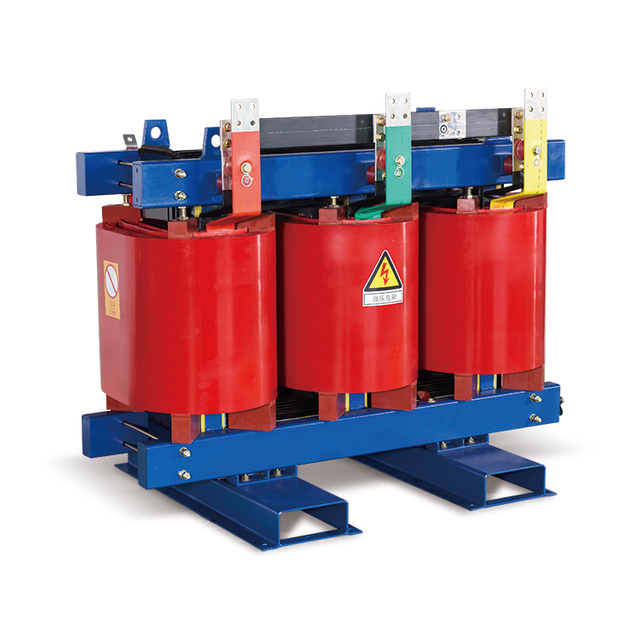
Urban centers, tall buildings, and subterranean installations face considerable fire risks from combustible oil. Under these conditions, dry-type transformers offer the preferred engineering solution. Such devices substitute liquid dielectrics with epoxy resin applied through vacuum casting around the coils, forming a rigid, fire-resistant enclosure.
Since oil reservoirs become unnecessary, these transformers occupy less space and demand far lower upkeep. Meanwhile, they eliminate concerns about fluid leakage, rendering them especially suitable for environmentally conscious projects that emphasize pollution avoidance.
Achieving effectiveness in global power distribution not only needs to rely on ordinary equipment, but also requires establishing collaboration with a producer possessing extensive technical expertise. SHENGTE emerges as a leading manufacturer, boasting more than 15 years of focused experience in advanced distribution products. Based in a 12,000-square-meter plant located in Guangdong, our company has developed into an approved vendor for prominent organizations, including the State Grid and China Southern Power Grid.
Adherence to ISO9001 certification and IEC requirements ensures that all products, from tailored substations to energy-efficient cast resin units, satisfy the strict expectations of present electrical systems. Through combined efforts in design, in-house fabrication, and thorough quality verification, SHENGTE delivers the reliability essential for maintaining stable, intricate power networks.
Performance in power distribution gets evaluated according to reductions in no-load and load-related losses. Experienced network planners emphasize these parameters since they exert considerable influence on the Total Cost of Ownership (TCO) throughout the typical 20- to 30-year service duration.
Core configuration stands as a key determinant of magnetic performance. Recent production methods incorporate a three-step fully mitered joint arrangement. Such a design creates a smoother pathway for magnetic flux, substantially cutting no-load current alongside noise arising from magnetostriction.
Careful alignment of silicon steel grain direction together with improved lamination techniques enables engineers to obtain remarkably silent functioning and superior energy preservation unattainable in earlier straight-cut joint designs.
Conventional wire-wound arrangements commonly experience issues from helical pitch angles that lead to uneven electromagnetic forces under fault conditions. Modern low-voltage coils often implement copper or aluminum foil construction to address these challenges. Foil-based windings spread current uniformly along the conductor breadth, equalizing ampere-turn distribution and conferring outstanding durability against mechanical forces during short circuits.
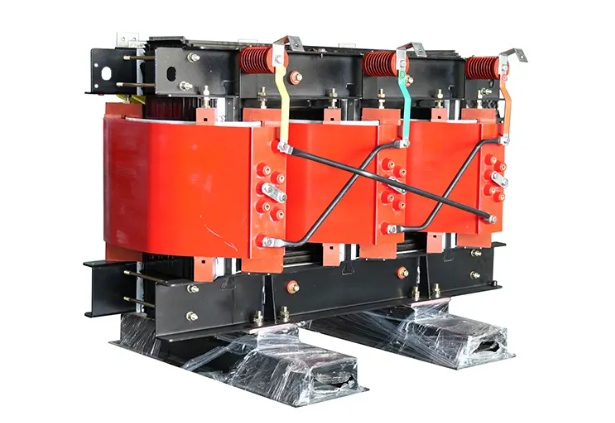
In densely populated indoor settings where consistent performance holds utmost importance, the SCB11/10 800 KVA 10/11-0.4 Kv three-phase high voltage cast resin dry type power transformer incorporates this progressive winding approach. The unit supports operation at 120% rated capacity with forced ventilation, positioning it as an excellent option for sites experiencing variable load patterns. Vacuum-applied resin provides strong moisture resistance, permitting reliable performance even in fully saturated humidity without insulation failure.

Distribution elements always interact with surrounding conditions. Moisture penetration, earthquake forces, and fluctuating demand patterns necessitate strong physical safeguards.
Ingress Protection (IP) classifications define the protective limits for transformer operation. An IP20 enclosure might be considered appropriate for a switchgear area, while a more adverse environment might necessitate an IP23 or higher rating, protecting against water ingress, which might compromise the insulation.
In some special applications, such as buried substations, the devices may be located in a stainless steel enclosure, providing an IP68 rating. This level of protection ensures continued operation of the transformer in the event of full submersion, thereby preventing loss of supply due to flood or high groundwater tables in shoreline areas.
Q: How does the use of amorphous alloy in core construction differ from traditional silicon steel?
A: Unlike silicon steel cores, amorphous alloy cores have an unorganized atomic structure that significantly reduces hysteresis losses. Although conventional silicon steel (evident in the S11 or SCB11 ranges) provides excellent efficiency and reasonable cost for typical distribution tasks, amorphous alloy versions can decrease no-load losses by 70-80%. Such characteristics suit applications with frequent light loading or stringent energy-saving regulations.
Q: What is the technical advantage of a “sealed” oil-immersed transformer over a conservator-style unit?
A: Hermetically sealed transformers employ corrugated tanks or fixed gas cushions to accommodate oil volume changes without atmospheric contact. This isolation stops oxygen and moisture uptake—the main drivers of insulation deterioration. As a result, sealed designs need minimal servicing and exhibit extended insulation lifespan compared with conservator-equipped models.
Q: Why is the vacuum-casting process essential for dry-type transformers?
A: Vacuum casting guarantees thorough epoxy resin penetration into glass fiber supports and coil interstices, eliminating all air inclusions. Since air exhibits weaker dielectric properties than resin, residual voids can initiate partial discharge that gradually damages insulation and causes breakdown. Vacuum casting results in low levels of partial discharge, which is combined with high mechanical strength, allowing the transformer to withstand electrical transients and mechanical stresses.