- All
- Product Name
- Product Keyword
- Product Model
- Product Summary
- Product Description
- Multi Field Search
Views: 0 Author: Site Editor Publish Time: 2026-02-27 Origin: Site

Modern electrical networks function in an environment markedly different from the conventional one-directional flow originating at generation facilities and ending at passive loads. Current systems must accommodate variable renewable inputs, underground infrastructure, distributed energy resources, and stringent reliability expectations. In the context, substations, grid stations, and switchyards serve not only as routine transfer points but also as carefully coordinated functional hubs that ensure voltage stability, safe power routing, and operational continuity.
Nowadays, infrastructure designers assess these facilities according to adaptability, deployment feasibility, full-process lifecycle performance, and compatibility with emerging grid frameworks. The article analyzes their respective contributions from a comprehensive system-engineering perspective and connects equipment decisions to realistic deployment considerations.
Even with progress in distributed generation approaches and intelligent grid technologies, substations continue to represent indispensable elements. They constitute the principal boundary where voltage adjustment, protective arrangement coordination, and network partitioning take place. Absent dependable substations, network robustness deteriorates rapidly under abnormal conditions.
Today, substations manage increasingly sophisticated configurations in which sustained functionality must coexist with serviceability and preparedness for future modifications.
Voltage adjustment fundamentally determines energy conveyance effectiveness. Raising or lowering voltage magnitudes diminishes dissipation during transit and maintains current values within acceptable boundaries, thereby reducing conductor heating effects.
Transformer impedance characteristics also govern fault current magnitudes and protective device discrimination capabilities. Carefully selected impedance values ensure disturbances remain confined while preserving overall equilibrium. Contemporary transformer designs incorporate reduced-loss core materials and refined winding arrangements that decrease both idle-state and full-load energy dissipation without compromising fault-current endurance, thereby enhancing sustained network capability.
Physical arrangement in substations affects ease of servicing access, thermal dissipation effectiveness, and fire containment provisions. Space-efficient indoor configurations enhance land utilization but necessitate thorough ventilation planning and insulation compatibility.
Outdoor layouts facilitate subsequent enlargement but demand appropriate protection against atmospheric exposure. Engineering judgments must weigh spatial limitations, servicing demands, and dependable performance instead of pursuing minimal area occupation exclusively.
Grid stations are typically located nearer to significant consumption zones and industrial concentrations. Their central purpose focuses on elevating distribution performance and stabilizing regional voltage conditions rather than overseeing extended transmission pathways.
These installations also confront restrictions involving restricted metropolitan space availability, ecological considerations, and accelerated construction timelines.
Positioning transformation capacity adjacent to major consumption areas shortens feeder distances and associated line losses while simultaneously improving voltage regulation quality. Reduced distribution circuit lengths decrease vulnerability to interruptions and strengthen responsiveness amid varying demand patterns.
Consequently, grid stations function as localized management nodes that equalize consumption fluctuations while upholding reliable delivery characteristics.
Rapid urban growth and regulatory zoning constraints increasingly direct electrical infrastructure toward underground placement. Prefabricated modular units and buried substations allow deployment without significant disruption to urban landscapes while improving operational safety.
In situations requiring compact and rapid deployment, integrated modular units simplify civil construction and diminish site-related complexities. One representative example is the YBD 800kVA 12kV 0.4kV Customized Buried Type Power Transformer Package Substation, which integrates voltage conversion, circuit control, and protection equipment in a compact underground-compatible system particularly suitable for densely populated districts.

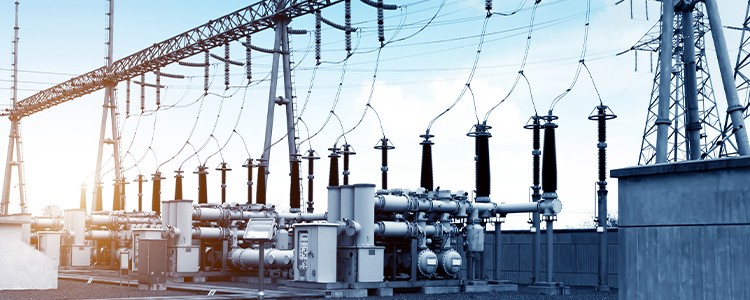
Switchyards frequently appear limited to basic circuit management functions, but their broader contribution to the network is considerably more strategic. They regulate power movement patterns across various network portions while enabling swift fault separation to avoid progressive collapse phenomena.
Busbar arrangement choices substantially determine operational adaptability. Double-busbar configurations and ring-bus layouts permit equipment servicing or fault isolation procedures without causing extensive service interruptions, thereby allowing continued functionality throughout component replacement activities.
Consequently, switching architecture evolves into an essential resilience engineering instrument beyond mere interconnection design.
Switchyards function in close association with protective relaying devices and circuit interruption equipment that require precise timing alignment. Inaccurate sequencing or improper settings may trigger unwarranted disconnections or cause component deterioration.
Thorough coordination ensures that disconnection occurs solely in the impacted zone while unaffected portions continue normal operation, thereby sustaining overall network equilibrium.
Conventional substation construction demanded extensive field assembly operations, thereby prolonging commissioning periods and elevating deployment uncertainties. Modern integrated approaches transfer substantial portions of this complexity into controlled factory settings.
Prefabricated substation assemblies combine transformers, switching gear, and protective arrangements in uniform enclosures. This methodology substantially decreases onsite uncertainty levels and accelerates overall project timelines.
Standardized modular construction furthermore ensures uniform performance characteristics through rigorous factory verification procedures conducted before shipment.
Long-term maintenance costs are usually much higher than the initial investment across the long-term service periods. Decreasing maintenance demands, improving thermal management, and enhancing short-circuit resistance capabilities collectively significantly reduce total lifecycle costs.
For standardized underground applications requiring adaptability and quick implementation, the YBD 630kVA 12kV 400V Electrical Boxtype Underground Transformer Modular Substation illustrates how integrated engineering balances cost efficiency with operational reliability in dense distribution environments.

Component reliability depends upon both engineering specifications and manufacturing accuracy, and systematic verification processes. Uniformity across production units directly affects field performance consistency.
Standard routine evaluations and comprehensive type verification procedures confirm transformer thermal behavior, dielectric integrity, and fault-current resistance characteristics. Adequately validated equipment exhibits predictable response patterns during overload situations and disturbance events, thereby securing sustained operational safety.
Unified design development, production, and testing contribute to enhancing overall coordination. Engineering modifications respond more promptly to specific project requirements while maintaining consistent quality standards in successive manufacturing cycles.
At the stage of project planning, many technical specialists assess potential suppliers according to comprehensive internal production capabilities. SHENGTE maintains this integrated operational approach, specializing in distribution transformers, prefabricated substations, and medium–low voltage equipment developed through in-house design and manufacturing processes. Supported by more than fifteen years of experience in power distribution equipment and products conforming to IEC standards, our equipment is commonly used in projects where installation constraints, protective coordination, and long-term operational performance must be collectively evaluated.
Electrical networks currently undergo transformation at rates exceeding conventional infrastructure service durations. Consequently, substation configurations must accommodate unpredictable forthcoming operating environments.
Distributed generation sources introduce reversed energy movement directions and irregular consumption profiles. Installed equipment must withstand variable operational states while preserving effective protective discrimination.
Thermal endurance characteristics and fault-current management capabilities assume heightened importance in networks featuring substantial renewable contributions.
Infrastructure engineered without provisions for subsequent enlargement faces accelerated obsolescence risks. Modular growth strategies permit incremental capital deployment while simultaneously maintaining system interoperability.
Scalable substation designs therefore deliver essential operational versatility as consumption volumes increase or usage characteristics evolve.
Substations, grid stations, and switchyards collectively determine operational characteristics of current electrical networks. Their efficient running hinges upon careful coordination among voltage transformation, switching configuration, equipment reliability, and future expansion readiness.
Therefore, modern grid development is not limited to focusing on the equipment capacity alone, but emphasizes the coordination between infrastructure deployment, urban restrictions, full-process performance, and evolving energy landscapes, thereby ensuring networks maintain stable, adaptable, and economically feasible.
Q1: How do grid stations differ functionally from distribution substations?
A: Grid stations are located nearer to principal consumption zones and concentrate on voltage regulation and feeder performance optimization instead of overseeing extended transmission responsibilities.
Q2: Why are underground substations increasingly specified in urban projects?
A: Underground configurations minimize conflicts regarding land utilization, enhance personnel safety levels, reduce visible disturbances, and ecological disturbances, while simultaneously preserving required electrical capabilities.
Q3: What factors most strongly affect substation reliability over time?
A: Transformer thermal engineering characteristics, fault-current endurance properties, manufacturing consistency standards, and appropriate protective coordination arrangements exert considerable influence upon sustained operational dependability.