- All
- Product Name
- Product Keyword
- Product Model
- Product Summary
- Product Description
- Multi Field Search
Views: 0 Author: Site Editor Publish Time: 2026-02-18 Origin: Site


Transformer failure continues to stand out as a troublesome incident across power distribution systems. Despite continuous improvements in materials, monitoring equipment, and engineering standards, the equipment now functions amid increasingly complex environments: denser loading patterns, more confined installation areas, and stronger demands for uninterrupted supply. One failure can cause complete feeder lines, harm connected devices, and bring potential hazards. Generally, the failure arises not from a single isolated occurrence but rather from the combined impact of thermal, electrical, mechanical, and environmental pressures that develop across extended periods.
Failure patterns in transformers typically divide into two main groups: gradual degradation and abrupt activating incidents. Each group remains closely linked to actual service circumstances and built-in safety allowances.
High temperature ranks among the strongest influences on transformer degradation. Long-term operation close to or beyond thermal limits causes insulating substances to lose structural strength and dielectric ability. Certain spots inside windings age compared with the average measured heat levels. Eventually, this irregular aging creates vulnerable zones, thereby raising the chances of partial discharges, short circuits, or total insulating failure.
Electrical faults, including short circuits, excessive voltage spikes, and switching surges, apply severe pressure in extremely short intervals. Short-circuit currents produce a substantial electromagnetic force that can destroy windings and harm internal bracing elements. Overvoltage disrupt insulation balance and starts partial discharge processes that speed up overall degradation.
The surrounding environment determines whether a transformer achieves its planned duration or experiences early termination.
Water presence lowers insulating capability and promotes surface current paths. In oil-based systems, liquid contamination impairs the oil’s insulation performance. In inadequately protected dry installations, high moisture levels sometimes cause condensation across insulating surfaces. After water penetrates the insulating system, the possibilities of discharge and flashovers rise considerably.
Industrial dust, conducting debris, and various chemical pollutants rest on insulating exteriors and cooling routes. Such substances form conductive trails, enhance surface heat, and impede ventilation. Gradually, concentrated warming combined with electrical pressure weakens insulation and heightens the chance of failure.
Structural integrity is an essential but often overlooked aspect of transformer dependability.
Throughout fault situations, windings experience both axial and radial pressures that challenge their physical construction. Multiple stress events, although not immediately destructive, progressively loosen supports and deform conductor shapes. This deformation changes electrical spacing and adds additional stress on insulation under normal conditions.
Vibration from varying loads, ventilation equipment, or adjacent equipment gradually loosens fasteners and connections. Poor mechanical stability increases electrical contact resistance and generates focused heating points, thereby accelerating insulating material deterioration.
Many failure patterns trace back to choices established during initial engineering and production phases.
Merely relying on the designated power rating fails to fully indicate reliability. The structure of insulation layers, management of discharges, and selection of material grades determine tolerance toward prolonged electrical and heat-related pressures. Designs that limit partial discharges while ensuring consistent insulating reserves preserve effectiveness across long-term operational spans.
The chosen cooling approach plays a critical role in the temperature levels during service and capacity for temporary overloads. Simple natural convection provides simple operation, while assisted air circulation supplies an additional thermal buffer. Properly designed cooling maintains even heat distribution and avoids concentrated high-temperature regions that speed up aging.
Dry-type transformers tackle several typical failure causes found in oil-immersed transformers, especially in enclosed spaces and near consumption points.
Epoxy resin casting fully surrounds windings, thereby restricting contact with water vapor, airborne particles, and various contaminants. This protective layer demonstrates notable resilience against damp conditions and completely removes concerns regarding fluid escape. Strong resistance to fire and minimal smoke generation enhances security in restricted installations.
Balanced distribution of resin material and carefully planned ventilation routes promote effective heat removal. Certain dry-type transformers, when provided with forced airflow, can operate above standard ratings for a controlled duration without damaging insulating properties, thereby offering greater operational adaptability.
SHENGTE specializes in distribution transformer solutions that especially target common failure sources faced in practical grid environments. Drawing on more than 15 years of production expertise and full conformity with IEC standards, our products prioritize strong insulation ability, strengthened mechanical construction, and stable thermal performance rather than simple reliance on nominal specifications.
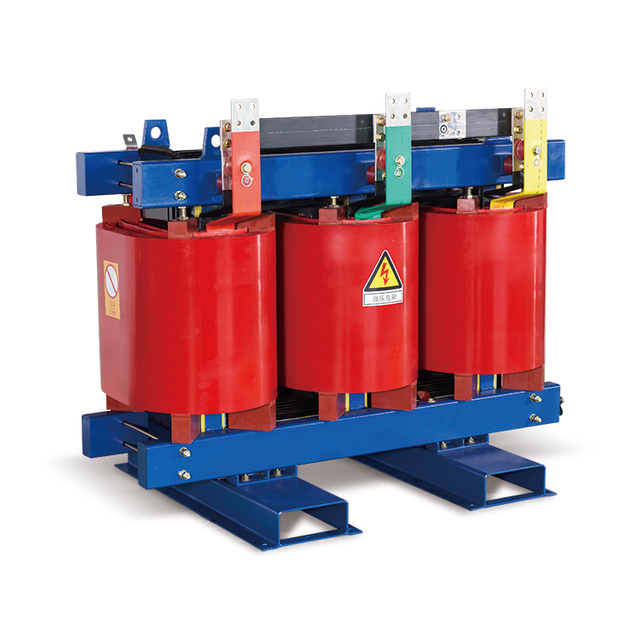
Our Dry-type transformers feature vacuum-cast epoxy resin for minimal partial discharge activity, fortified coil assemblies for improved short-circuit endurance, and integrated temperature tracking systems to ensure consistent functioning across challenging settings.
Specific engineering applications show the practical translation of reliability concepts into daily performance.
The SCB11/10 800 kVA cast resin dry-type transformer has been developed specifically for demanding indoor usage scenarios. Low partial discharge characteristics combined with elevated thermal classification insulation lessen electrical pressure, while reinforced coil designs enhance the ability to withstand short-circuit impacts. These features help restrict progressive deterioration during steady operation close to consumption areas.

The SCB10 630 kVA resin casting dry-type transformer accommodates adaptable voltage systems and solid structural stability. Carefully balanced winding configuration and optimized cooling channels support consistent insulating behavior across fluctuating demand patterns, thereby decreasing chances of continuous degradation.

Design quality must be supported by appropriate operational practices.
Preserving sufficient capacity reserves restricts heat-related pressure and retards insulating deterioration. Precise prediction of demand levels combined with the prevention of extended overloading markedly prolongs the durability of transformers.
Continuous monitoring, such as observing temperature patterns, loading trends, and discharge patterns, enables one to spot unusual trends at early stages, thus providing an opportunity for intervention before issues become major problems.
Proper transformer choice should be aligned with specific practical dangers and service environments.
Closed spaces, public spaces, and ongoing industrial operations can benefit from fire-resistant designs that require low maintenance, such as having strong tolerance capabilities.
Lower maintenance requirements, reduced risks of down time, and extended operating life often render higher-quality alternatives more cost-effective despite initial cost differences.
Q1: Are most transformer failures due to sudden failure or steady degradation?
A: The majority of the failures are due to steady degradation resulting from the combined effect of thermal, electrical, and environmental stresses, and sudden failure is the final triggering factor.
Q2: Do dry-type transformers eliminate fire and moisture risks?
A: These designs substantially lower such hazards through resin-based insulation and the absence of liquid, although correct installation and adequate ventilation continue to play necessary roles.
Q3: How early can transformer failure be detected?
A: Through constant observation of temperature variations and electrical characteristics, numerous deterioration patterns become noticeable considerably before severe damage develops.